






 Casa
Casa Productos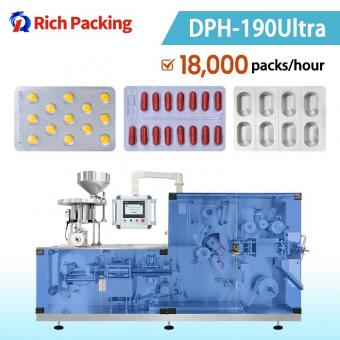
29+ years in pharmaceutical machinery, covering capsule filling, tablet pressing, blister packaging, tablet and capsule counting, cartoning, GMP production, and overseas machine service.

El tiempo de cambio en el envasado farmacéutico es el período entre el último envase aceptable de un lote y el primer envase estable y aceptable del siguiente lote. Puede implicar un nuevo producto, tamaño de botella, formato de blíster, tamaño de caja, etiqueta, prospecto, código de lote o configuración de inspección. Para fábricas que manejan muchos SKU, este tiempo de inactividad puede eliminar silenciosamente horas de producción disponible cada semana.
Un cambio de línea de envasado no es solo un intercambio de molde o un ajuste de riel guía. Por lo general incluye liberación de línea, limpieza, reemplazo de piezas de formato, configuración de receta, verificación de códigos, ajuste de inspección, ejecución de prueba y confirmación de los primeros envases aceptables. La mayoría de los cambios pasan por cuatro etapas: detener la producción anterior, limpiar la línea, configurar el nuevo formato y reiniciar hasta que se confirme una salida estable.
El desafío es más intenso en el envasado farmacéutico porque la velocidad no puede comprometer la identidad del producto ni el control de calidad. Un cambio más rápido aún requiere piezas de contacto limpias, etiquetas correctas, códigos de lote y caducidad correctos, conteo o sellado confiable y sistemas de inspección que se ajusten al nuevo formato.
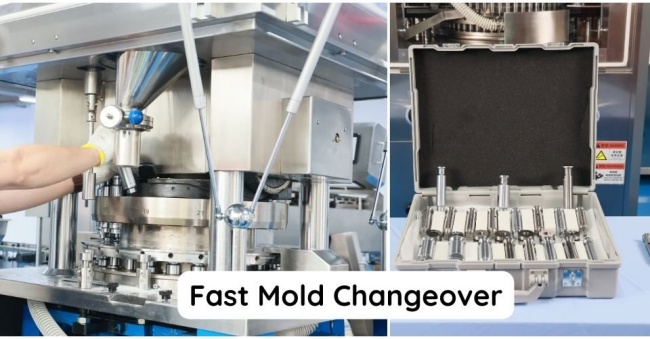 cambio rápido de molde en máquina de prensado de tabletas
En la fabricación general, el tiempo de cambio suele medirse desde la última unidad buena de la producción anterior hasta la primera unidad buena de la siguiente. En el envasado farmacéutico, el siguiente envase bueno también debe contener el producto correcto, cantidad, empaque, etiqueta, código de lote, fecha de caducidad y resultado de inspección.
Una línea de botellas de tabletas puede pasar de botellas redondas de 60 unidades a botellas cuadradas de 120 unidades. La máquina electrónica de conteo, las guías de botellas, las boquillas de llenado, la estación de tapado, el sellador por inducción, la etiquetadora, la báscula de control y el tiempo de rechazo pueden requerir ajustes. Una línea de blíster puede cambiar la disposición de cavidades, profundidad de formado, temperatura de sellado, posición de impresión y disposición de corte. Una línea de encajonado puede cambiar el tamaño de la caja, el plegado del prospecto, la posición del empujador, las guías del producto y la ubicación del código de lote.
Por eso el tiempo de cambio no es lo mismo que el tiempo de ajuste mecánico. Un molde puede reemplazarse rápidamente, pero el cambio completo de lote a lote puede tardar más si la limpieza, la liberación de línea, el control de materiales impresos y las verificaciones de reinicio no están bien organizadas.
El cambio en el envasado farmacéutico toma más tiempo que el envasado ordinario porque la línea debe controlar la identidad del producto, los materiales impresos, la limpieza y las configuraciones de inspección al mismo tiempo.
La similitud de productos es un problema común. Dos lotes de tabletas pueden verse casi iguales pero tener diferentes concentraciones, cantidades, etiquetas o idiomas de exportación. Dos productos en cápsulas pueden usar cubiertas similares pero requerir diferentes códigos de lote o diseños de caja. Un equipo de producción no puede tratar esto como simples cambios de empaque porque cualquier confusión puede afectar la liberación del lote.
Los materiales impresos añaden otra capa de riesgo. Etiquetas, cajas, prospectos, números de lote, fechas de caducidad, códigos de barras y datos de serialización pueden cambiar entre lotes. Incluso si el formato mecánico permanece casi igual, el equipo de envasado debe confirmar que los componentes impresos antiguos se retiren y los nuevos coincidan con la orden de trabajo.
La limpieza también afecta el tiempo de inactividad. Polvo de tabletas, polvo de cápsulas, gránulos, piezas rotas y pequeños restos de etiquetas pueden permanecer en tolvas, canales, rieles guía, ruedas estrella, zonas de sellado, almacenes de cajas y contenedores de rechazo. Si las piezas de contacto son difíciles de desmontar o las esquinas ocultas son difíciles de acceder, el cambio se vuelve más lento y menos repetible.
Muchas fábricas solo registran el tiempo total de inactividad. Para reducir el tiempo de cambio, el equipo debe dividir la parada en actividades más pequeñas e identificar cuál causa el retraso.
|
Área de cambio |
Pérdida de tiempo típica |
Punto de control práctico |
|
Liberación de línea |
Etiquetas, cajas, prospectos, botellas, tapas o materiales impresos antiguos permanecen cerca de la línea |
Usar flujo de materiales claro, contenedores marcados, pasos de liberación escritos y puntos de inspección visibles |
|
Limpieza |
Quedan polvo o residuos en tolvas, canales, guías, áreas de transferencia o zonas de sellado |
Usar piezas de contacto sin herramientas, acceso abierto a la máquina, menos rincones ocultos y herramientas de limpieza preparadas |
|
Reemplazo de piezas de formato |
Los moldes, rieles, ruedas estrella, guías, canales, piezas de cartón o soportes de codificación tardan demasiado en cambiarse |
Usar piezas de bloqueo rápido, ranuras de posicionamiento, piezas modulares y conjuntos de formato etiquetados |
|
Configuración de receta |
Velocidad, conteo, tiempo de rechazo, datos de código y configuraciones de inspección se introducen manualmente |
Almacenar recetas por SKU y controlar el acceso a parámetros mediante el HMI |
|
Confirmación de reinicio |
Los primeros envases son inestables o son rechazados después del reinicio |
Confirmar los primeros envases aceptables mediante controles de conteo, sellado, código, etiqueta, peso y rechazo |
Este desglose evita que el equipo culpe solo a la máquina principal. Una línea puede perder más tiempo en la liberación de línea, configuración de codificación o verificaciones repetidas de reinicio que en el cambio físico del molde.
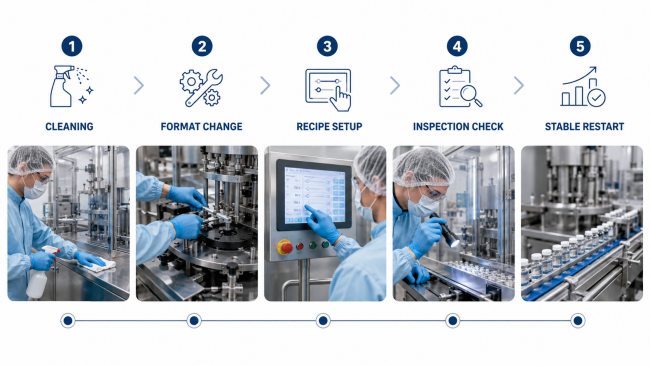 desglose visual de la pérdida de tiempo durante el cambio de línea de envasado
SMED, abreviatura de Single-Minute Exchange of Die, es útil para los equipos de envasado porque separa el trabajo de cambio en tareas que deben hacerse durante la parada y tareas que pueden prepararse antes de que la línea se detenga.
Las tareas externas deben prepararse mientras el lote actual aún está en producción. Las piezas del próximo formato, cajas, etiquetas, prospectos, datos de codificación, herramientas de limpieza, botellas de muestra y listas de inspección pueden prepararse con antelación. Los operarios no deben perder tiempo de parada buscando el siguiente riel guía, confirmando el diseño o buscando herramientas de limpieza.
Las tareas internas deben simplificarse. Si un molde de blíster requiere alineación manual repetida, la línea permanece detenida más tiempo. Si un cambio de tamaño de caja requiere muchas piezas sueltas y ajustes de herramientas, el reinicio se vuelve menos predecible. Diseños de posicionamiento rápido, menos tornillos, piezas etiquetadas y ensamblajes modulares reducen el número de decisiones que los operarios deben tomar durante la parada.
SMED no debe usarse para omitir pasos de control obligatorios. En el envasado farmacéutico, el objetivo no es eliminar la liberación de línea, la limpieza o la inspección. El objetivo es hacer esos pasos más fáciles, rápidos y consistentes.
Un cambio rápido no se trata solo de reemplazar piezas rápidamente. Los equipos de producción también necesitan acceso claro para limpieza, posicionamiento repetible de formatos, configuraciones de máquina guardadas y salida estable después del reinicio.
En una máquina llenadora de cápsulas duras, el cambio normalmente implica piezas de tamaño de cápsula, componentes de dosificación, varillas de llenado, moldes y limpieza de superficies de contacto con el producto. Un diseño de varilla de llenado de cambio rápido puede reducir el reemplazo del molde a unos 15 minutos cuando las piezas necesarias están preparadas y el operario sigue el procedimiento correcto.
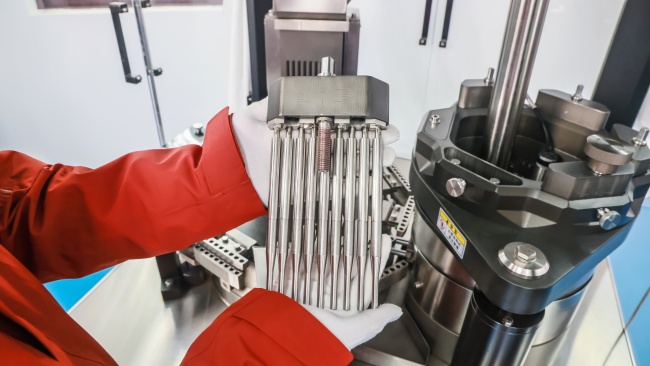 Diseño modular de la varilla de llenado para máquina de llenado de cápsulas
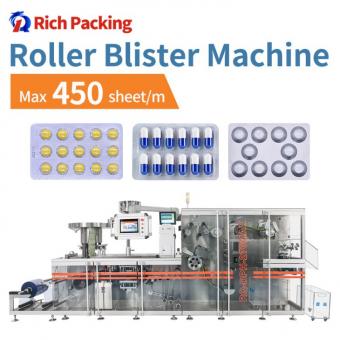
En una máquina de envasado en blíster de tabletas y cápsulas, el tiempo suele perderse en el reemplazo del molde de formado, alineación de la placa de sellado, configuración del riel guía, posición del código de lote y ajuste de la estación de corte. Un diseño modular de molde con ranura tipo cajón permite a los operarios extraer y reconectar el conjunto de moldes mediante ranuras de posicionamiento. Con instalación de conexión rápida mediante ranuras de extracción y un riel guía integrado de aleación de aluminio, la instalación completa del molde puede terminarse en unos 10 minutos en condiciones preparadas.
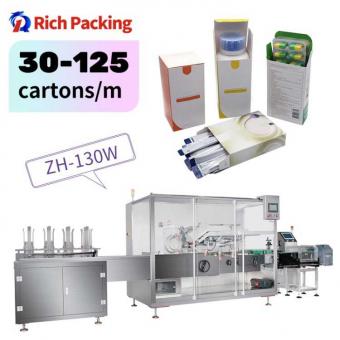
En una máquina encartonadora farmacéutica, el cambio de formato puede implicar tamaño de caja, guías del producto, manejo del prospecto, posición del empujador y ubicación del código. Para tamaños de producto compatibles, un diseño práctico de ajuste puede requerir solo 3-5 piezas de formato, mientras que otras posiciones se ajustan mediante configuraciones mecánicas accesibles.
Estos ejemplos muestran por qué el rendimiento del cambio depende de los detalles. El acceso sin herramientas, las piezas de formato modulares, las ranuras de posicionamiento, el almacenamiento de recetas, las áreas de limpieza abiertas y los puntos de ajuste claros suelen importar más que una alta velocidad nominal. Con 29 años de experiencia en equipos de envasado y soporte de instalación en el extranjero, Rich Packing diseña los detalles de cambio en función de las necesidades de producción diaria, no solo de las especificaciones de catálogo.
Diferentes máquinas de envasado generan diferentes problemas de cambio. Una revisión útil debe considerar toda la línea, no solo una máquina.
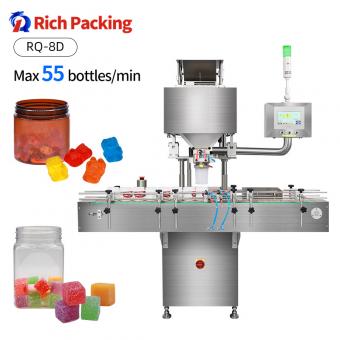
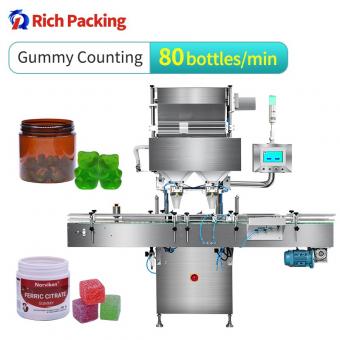
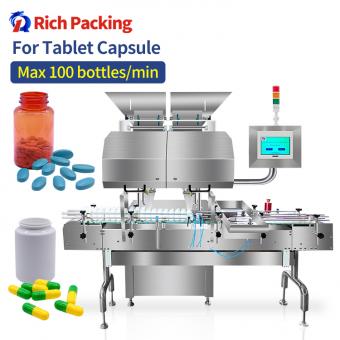
Para una línea de conteo y embotellado de tabletas o cápsulas, el cambio no se limita a la máquina electrónica de conteo. Las guías de botellas, boquillas de llenado, espaciado del transportador, manejo de tapas, ajustes de sellado por inducción, posición de la etiqueta y tiempo de rechazo deben coincidir con el nuevo formato de botella. Si la línea usa una máquina de conteo visual o una máquina de conteo por visión CCD, la configuración de imagen, valores de conteo, rechazo de piezas rotas y sincronización de botellas también deben guardarse y recuperarse correctamente.
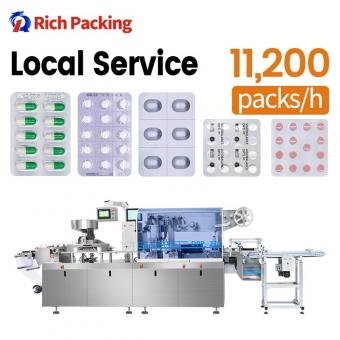
Para una máquina de envasado en blíster farmacéutico, el cambio de formato está ligado al diseño de cavidades, material de formado, temperatura de sellado, registro de impresión y disposición de corte. El equipo debe verificar si la máquina de formado y sellado de blíster utiliza posicionamiento repetible del molde.
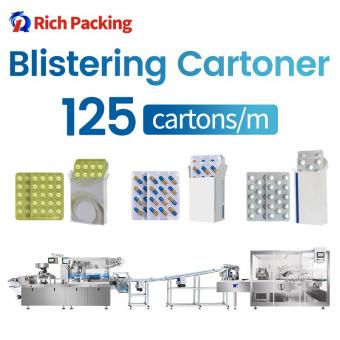
En una máquina encartonadora horizontal, el diseño del cartón a menudo determina lo difícil que será el reinicio. Cartones delgados, tolerancias ajustadas de las solapas, botellas pesadas, paquetes de blíster múltiples, inserción de prospectos y la posición del codificado pueden ralentizar los primeros minutos estables después del reinicio. Una máquina encartonadora de blíster y una máquina encartonadora de botellas pueden compartir la misma función general, pero la alimentación del producto y el manejo del cartón son diferentes.
La prueba más útil no es una demostración limpia usando un único formato perfecto. Un equipo de producción debería solicitar ver dos formatos, dos tamaños de botella, dos tamaños de cartón, dos diseños de blíster o dos tamaños de cápsula cuando sea posible. La prueba debe registrar el tiempo desde el último envase aceptable del primer formato hasta el primer envase estable y aceptable del segundo formato.
La prueba debe incluir la retirada de piezas de formato, la revisión del acceso para limpieza, la instalación de nuevas piezas, la configuración de la receta en el HMI, el cambio de código, la configuración de parámetros de inspección, la confirmación del primer envase y varios minutos de funcionamiento estable después del reinicio.
Los operarios también deben comprobar si el mismo resultado puede ser repetido por personal habitual. Si solo un ingeniero senior puede completar el cambio rápidamente, la fábrica aún puede perder tiempo después de la instalación.
Antes de aprobar una máquina o una configuración de línea, el equipo debe plantear preguntas prácticas: ¿Cuántas piezas deben cambiarse? ¿Se requieren herramientas especiales? ¿Las piezas están etiquetadas y almacenadas por formato? ¿Se pueden guardar recetas para cada SKU? ¿Los puntos de limpieza son visibles y accesibles? ¿El sistema de rechazo necesita ajuste manual de tiempo? ¿La línea produce muchos rechazos después del reinicio?
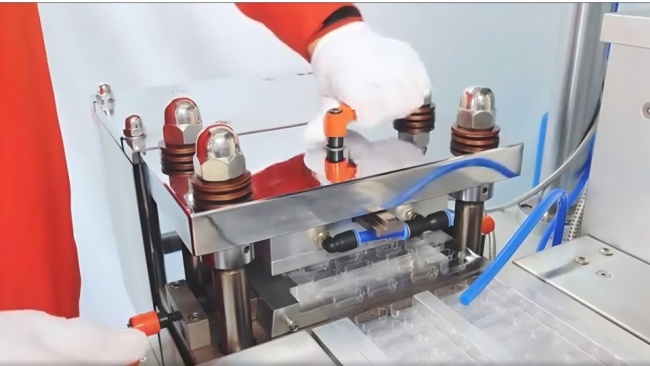 Cambio modular de moldes para equipos de envasado de blíster
El tiempo de cambio afecta la producción porque reduce el tiempo de fabricación disponible. Una máquina de alta velocidad aún puede producir menos envases vendibles por turno si la línea se detiene con frecuencia para limpieza, ajuste de formato, cambios de código, cambios de etiqueta o verificaciones de reinicio.
Reducir el tiempo de cambio aumenta la disponibilidad de la máquina, reduce errores de configuración y mejora la flexibilidad de la planificación. Es especialmente útil para lotes más pequeños, más SKU, lotes de exportación con diferentes etiquetas o campañas cortas.
El cambio más rápido aún debe estar controlado. La limpieza, la liberación de línea, las verificaciones de etiquetas, las verificaciones de código y la configuración de inspección deben seguir formando parte del proceso. La mejora proviene de hacer que esos pasos sean más simples y repetibles, no de eliminarlos.
El tiempo de cambio es una de las pérdidas ocultas más importantes en el envasado farmacéutico. Incluye la liberación de línea, la limpieza, los cambios de molde o formato, la configuración de recetas, las verificaciones de etiquetas y códigos, el ajuste de la inspección y el reinicio estable. Una línea con alta velocidad nominal aún puede perder producción si cada cambio de lote requiere un largo ajuste manual.
La forma más práctica de reducir el tiempo de cambio es combinar la preparación estilo SMED con equipos diseñados para cambios de formato repetibles. Los equipos de producción deben analizar el acceso a la limpieza, los moldes modulares, las piezas de posicionamiento rápido, las recetas almacenadas, el control de material impreso y la estabilidad del primer envase. El objetivo no es solo reiniciar más rápido, sino reiniciar correctamente.
Si su fábrica trabaja con múltiples SKU, tamaños de botella, formatos de blíster, tamaños de cartón o especificaciones de cápsulas, comparta su tipo de producto, producción objetivo, formato de envasado y problemas actuales de cambio con Rich Packing. Una revisión práctica puede ayudar a identificar de dónde provienen los tiempos de inactividad y qué características de la máquina son más importantes antes de seleccionar una nueva línea de envasado.
El tiempo de cambio es el tiempo necesario para pasar una línea de envasado de un producto, lote, formato o especificación de empaque a otro funcionamiento estable. Incluye limpieza, liberación de línea, cambios de piezas de formato, configuración de recetas, verificación de códigos, ajuste de inspección y confirmación de reinicio.
Los fabricantes pueden reducir el tiempo de cambio preparando tareas externas antes de que la línea se detenga, utilizando piezas de formato modulares, guardando recetas de máquina, mejorando el acceso a la limpieza, estandarizando los pasos del operario y midiendo el tiempo desde el último envase bueno hasta el primer envase bueno después del reinicio.
SMED significa Intercambio de Matriz en Minutos Únicos. En el envasado, es un método para reducir el tiempo de preparación y cambio moviendo tareas fuera del periodo de parada, simplificando tareas internas, estandarizando herramientas y haciendo que el ajuste de la máquina sea más repetible.
El cambio en el envasado farmacéutico tarda más porque la línea debe evitar mezclas de productos, retirar materiales impresos antiguos, limpiar partes de contacto, confirmar etiquetas y códigos de lote, ajustar sistemas de inspección y documentar que la siguiente producción está lista.
Sí. La FAT debe probar más de un formato cuando sea posible. La prueba debe registrar el acceso a la limpieza, el reemplazo de piezas, la configuración de recetas, el ajuste de inspección, la confirmación del primer envase y el funcionamiento estable después del reinicio.
[1] Lean Enterprise Institute - Cambio
https://www.lean.org/lexicon-terms/changeover
[2] eCFR - 21 CFR Part 211 Subparte G, Control de envasado y etiquetado
https://www.ecfr.gov/current/title-21/chapter-I/subchapter-C/part-211/subpart-G

29+ years in pharmaceutical machinery, covering capsule filling, tablet pressing, blister packaging, tablet and capsule counting, cartoning, GMP production, and overseas machine service.

Correo electrónico : manager@richpacking.cn
Building D, No. 226, Beishan Qiaotou Street, Haizhu District, Guangzhou City, Guangdong Province, China


 Red IPv6 admitida