






 Casa
Casa Productos

29+ years in pharmaceutical machinery, covering capsule filling, tablet pressing, blister packaging, tablet and capsule counting, cartoning, GMP production, and overseas machine service.

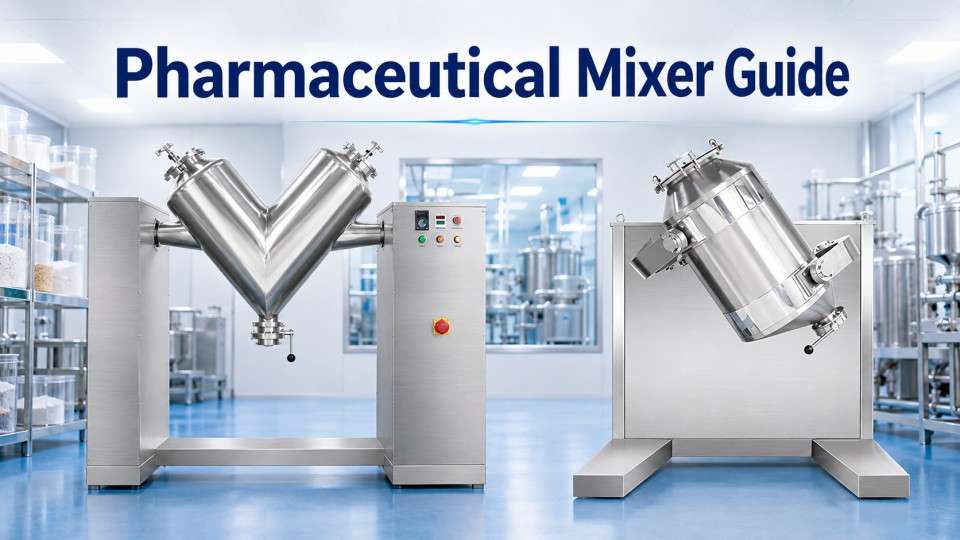
La mezcla es una operación unitaria central en la fabricación farmacéutica de formas farmacéuticas sólidas. Los polvos, gránulos, ingredientes farmacéuticos activos y excipientes a menudo deben combinarse antes de la granulación, la compresión de tabletas, el llenado de cápsulas o el envasado de polvo. Un mezclador farmacéutico crea el movimiento necesario para distribuir estos materiales a través de un lote, pero la máquina no determina por sí sola la calidad de la mezcla. El tamaño de partícula, la densidad aparente, la fluidez, la secuencia de carga, el nivel de llenado, el tiempo de mezcla y la transferencia de material influyen en el resultado final.
Los términos mezclador farmacéutico y homogeneizador farmacéutico a menudo se usan indistintamente. En la producción de formas farmacéuticas sólidas, “homogeneizador” suele referirse a equipos para polvos secos y gránulos, mientras que “mezclador” también puede describir equipos de mezcla húmeda y granulación. Esta guía se centra en los mezcladores utilizados para polvos y gránulos farmacéuticos, con especial atención al mezclador tipo V y al mezclador 3D.
Un mezclador farmacéutico combina dos o más materiales en una mezcla adecuada para la siguiente etapa de fabricación. En la producción de formas farmacéuticas sólidas, el lote puede contener un API, diluyentes, aglutinantes, desintegrantes, deslizantes, lubricantes, gránulos secos o pellets recubiertos.
La máquina debe crear un patrón adecuado de movimiento de partículas sin causar daños innecesarios, calor, adhesión o segregación. El punto final depende de la formulación y del proceso, en lugar de un tiempo de mezcla universal o una cifra de uniformidad anunciada. ICH Q8(R2) relaciona la comprensión de la formulación, los atributos del material, los parámetros del proceso y los controles de fabricación, respaldando el principio de que ningún ajuste único del mezclador puede sustituir la comprensión del proceso.
La mayoría de las máquinas combinan más de un mecanismo. Un mezclador farmacéutico tipo V se basa principalmente en el volteo y la difusión, un mezclador de cinta crea una convección más intensa, un mezclador 3D farmacéutico produce una trayectoria de polvo multidireccional y un farmacéutico mezclador 3D utiliza un impulsor y un cortador durante la granulación húmeda.mezclador granulador de alto cizallamiento utiliza un impulsor y un cortador durante la granulación húmeda.
Más fuerza no es automáticamente mejor. El volteo suave protege los gránulos frágiles, mientras que los polvos cohesivos pueden necesitar un movimiento más activo. Un cizallamiento más intenso puede favorecer la formación de masa húmeda, pero también puede alterar la estructura de las partículas o aumentar el calor.
El mezclador farmacéutico seleccionado afecta el tiempo de procesamiento, la descarga, la limpieza, la transferencia y la repetibilidad del lote. También influye en cómo se comporta la mezcla al alimentar una prensa de tabletas, máquina de llenado de cápsulas, granulador o máquina de llenado de polvo.
Una máquina adecuada aún puede producir una mezcla insatisfactoria cuando las diferencias de tamaño de partícula o densidad son demasiado grandes, la secuencia de carga no es adecuada, el nivel de llenado está fuera del rango práctico o el material se separa después de la descarga. La investigación sobre la mezcla farmacéutica muestra que la homogeneidad depende del diseño del equipo, la concentración del API, la secuencia de carga, el nivel de llenado, el tiempo, la velocidad, la escala y las propiedades del polvo como tamaño, forma, densidad y cohesividad.
Los diferentes diseños de mezcladores crean distintos movimientos de material. La siguiente comparación se centra en equipos utilizados habitualmente para polvos, gránulos y procesamiento de formas farmacéuticas sólidas.
|
Tipo de mezclador |
Acción principal |
Materiales adecuados |
Uso típico |
Limitación principal |
|
Mezclador tipo V |
Volteo suave de un solo eje |
Polvos y gránulos de flujo libre |
Premezcla y mezcla seca final |
Acción limitada sobre polvos fuertemente cohesivos |
|
Mezclador 3D |
Movimiento multidireccional del recipiente |
Polvos y gránulos que requieren un movimiento más amplio |
Mezcla en seco suave |
Mecanismo de accionamiento más complejo |
|
Mezclador de doble cono |
Mezcla por volteo suave |
Polvos secos y gránulos frágiles |
Mezcla general por lotes |
Menos eficaz para mezclas cohesivas difíciles |
|
Mezclador de contenedor o IBC |
Volteo del contenedor |
Lotes secos medianos y grandes |
Mezcla con menos pasos de transferencia |
Requiere contenedores compatibles y equipos de manipulación |
|
Mezclador de cintas |
Mezcla convectiva forzada |
Polvos que necesitan un movimiento más activo |
Lotes más grandes y una gama más amplia de materiales |
Más superficies internas que limpiar |
|
Mezclador granulador de alta cizalla |
Acción del impulsor y triturador |
Polvo con líquido aglutinante |
Mezcla húmeda y granulación |
Mayor cizalla y posible generación de calor |
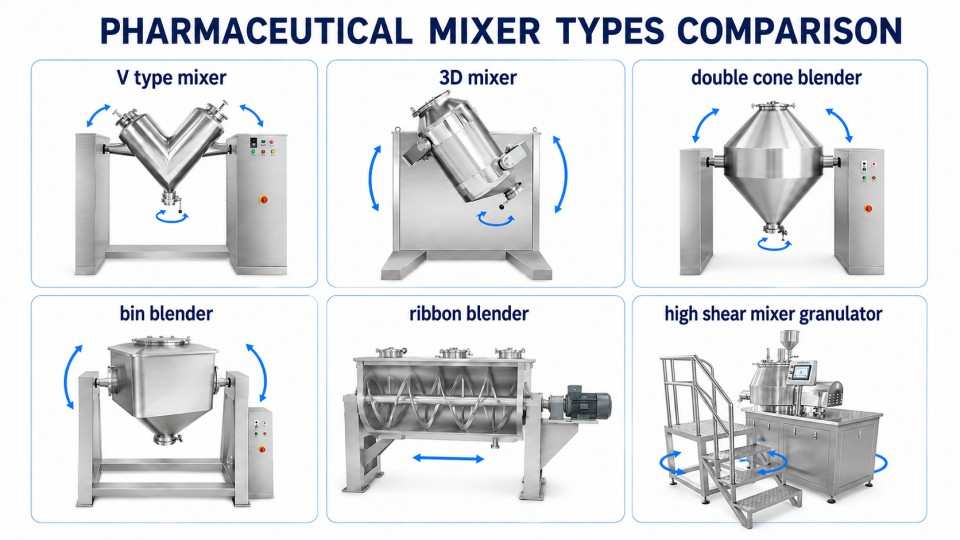
Los mezcladores tipo V, los mezcladores 3D, los mezcladores de doble cono y los mezcladores de contenedor mueven el material mediante la rotación o el reposicionamiento del recipiente. Normalmente proporcionan una cizalla relativamente baja y son adecuados para polvos secos o gránulos que pueden desplazarse por el lecho de polvo sin una agitación mecánica intensa.
Un mezclador tipo V divide el lote entre dos brazos conectados y lo vuelve a combinar cerca de la sección inferior, lo que lo hace práctico para polvos de flujo libre, gránulos secos y tratamientos suaves.
Un mezclador 3D mueve el recipiente en varias direcciones, creando una trayectoria más compleja mientras mantiene una cizalla baja. Es útil cuando las pruebas muestran que el volteo de un solo eje no redistribuye el material lo suficiente.
Un mezclador de doble cono permite una mezcla y descarga suaves, pero, al igual que otros mezcladores por volteo, puede tener dificultades con polvos cohesivos. Un mezclador de contenedor o IBC utiliza el contenedor de transporte como recipiente de mezcla, reduciendo los pasos de transferencia cuando el sistema más amplio de elevación, descarga y limpieza es compatible.
Un mezclador de cintas utiliza cintas helicoidales para un movimiento convectivo más intenso y puede ser adecuado para lotes más grandes o polvos que requieren una mezcla más activa, aunque sus ejes, sellos y extremos de la cuba añaden consideraciones de limpieza.
Un mezclador granulador de alta cizalla utiliza un impulsor y un triturador para distribuir el aglutinante y formar gránulos húmedos. No es un reemplazo directo de una mezcla final suave. Las investigaciones muestran que la falta de uniformidad puede desarrollarse tanto durante la mezcla en seco como durante la formación de masa húmeda, por lo que debe evaluarse todo el proceso.
Rich Packing proporciona mezcladores tipo V y mezcladores 3D para aplicaciones de polvos y gránulos. La selección debe comenzar con el comportamiento del material y los requisitos de producción, en lugar de asumir que la máquina más compleja siempre es mejor.
|
Factor de selección |
Mezclador tipo V |
Mezclador 3D |
|
Movimiento del recipiente |
Rotación alrededor de un eje principal |
Movimiento multidireccional |
|
Nivel de cizallamiento |
Bajo |
Bajo |
|
Materiales típicos |
Polvos y gránulos de flujo libre |
Polvos y gránulos que requieren una trayectoria más compleja |
|
Estructura mecánica |
Relativamente simple |
Más compleja |
|
Evaluación de limpieza |
La geometría simple del recipiente puede facilitar el acceso |
Depende de la extracción del recipiente y del diseño del accionamiento |
|
Inversión |
Generalmente menor |
Generalmente mayor |
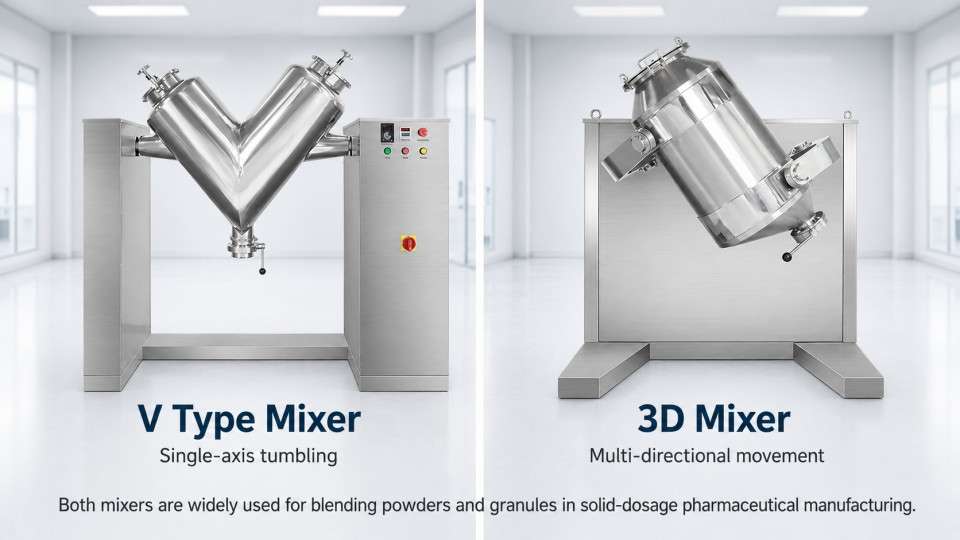
AUn mezclador tipo V suele ser un punto de partida práctico para una formulación de flujo libre con un tamaño de partícula y un rango de densidad manejables. Un mezclador 3D adquiere mayor relevancia cuando el movimiento multidireccional produce una mejor redistribución en las pruebas de materiales.
Ningún diseño elimina automáticamente la segregación ni garantiza un porcentaje fijo de uniformidad. Los polvos cohesivos pueden seguir siendo difíciles de manejar en ambos casos, y los componentes con tamaños o densidades muy diferentes pueden separarse durante la descarga. Por lo tanto, la selección debe basarse en el rendimiento real del material.
La selección comienza con las propiedades de la formulación:
Las propiedades del polvo afectan la mezcla, la transferencia, la formación de tabletas y el llenado de cápsulas. Una mala fluidez puede causar un movimiento inestable a través de tolvas y alimentadores, mientras que las diferencias en las propiedades de las partículas pueden aumentar el riesgo de segregación.
El volumen nominal del recipiente no es igual a la capacidad útil del lote. El polvo necesita espacio para moverse, mientras que un llenado insuficiente también puede debilitar la circulación prevista. La selección del lote debe considerar tanto el peso como el volumen aparente.
El rango efectivo de llenado debe establecerse para la máquina y la formulación específicas. Las investigaciones han demostrado que niveles altos de llenado pueden crear regiones con poco movimiento, por lo que no debe aplicarse un único porcentaje de carga a todos los mezcladores farmacéuticos.
Una mezcla puede separarse durante la descarga, el transporte, el llenado de tolvas o el llenado de matrices. Por lo tanto, la selección debe considerar la altura de caída, la vibración, el movimiento del aire, la geometría del contenedor y los pasos de transferencia.
Las revisiones de la fabricación de tabletas identifican las propiedades de las partículas, el flujo del polvo, la geometría del equipo y las etapas consecutivas de manipulación como causas interactivas de la segregación.
Las preguntas importantes incluyen si las superficies en contacto con el producto son accesibles, si el recipiente o los componentes internos pueden retirarse, dónde puede acumularse el residuo y si es apropiada la limpieza en seco, la limpieza húmeda o una disposición CIP.
El grado del acero inoxidable, el acabado superficial, las piezas desmontables y los dispositivos de pulverización pueden contribuir al diseño higiénico, pero ninguno hace que un mezclador cumpla automáticamente con las GMP. La guía de validación de procesos de la FDA enfatiza la evidencia científica y el control del ciclo de vida, mientras que ICH Q9(R1) recomienda decisiones basadas en riesgos proporcionales a la incertidumbre y la importancia.
Una prueba de materiales útil debería incluir:
El material no debe evaluarse únicamente por su apariencia dentro del recipiente. Una posición de muestreo puede no representar todo el lote. Los estudios de monitoreo multipunto han demostrado que observar solo una ubicación del mezclador puede representar de forma incorrecta el estado real de la mezcla.
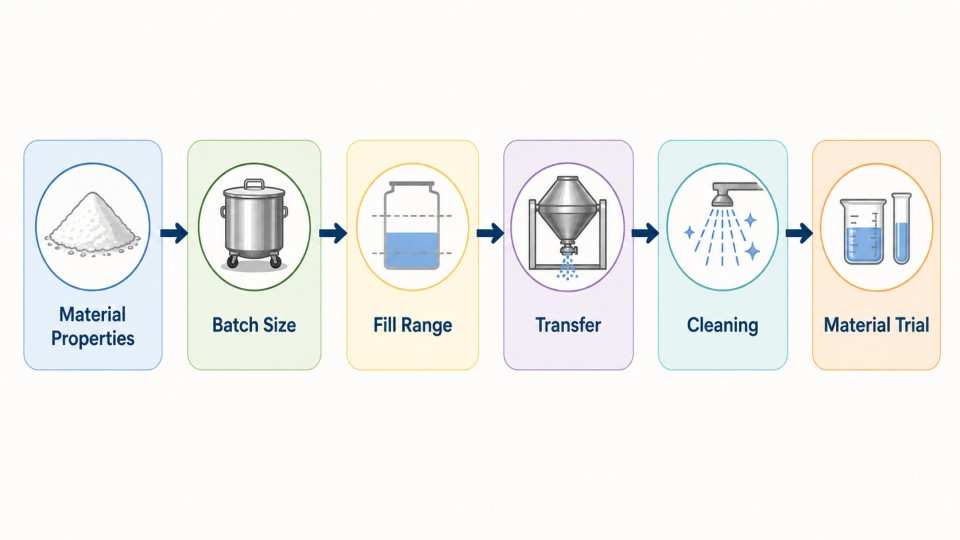 selección de mezclador farmacéutico
La distribución desigual puede deberse a un movimiento insuficiente, un orden de carga inadecuado, material cohesivo, un nivel de llenado incorrecto, aglomeración o una incompatibilidad entre el polvo y el mezclador.
Aumentar el tiempo de mezcla no resuelve todos los casos. Una mezcla puede alcanzar un equilibrio entre mezcla y segregación, después del cual las revoluciones adicionales aportan poca mejora o introducen nuevos riesgos de procesamiento.
La segregación puede producirse por tamizado, vibración, fluidización o caída libre. Por lo tanto, la transferencia del mezclador a un contenedor, tolva, prensa de tabletas o llenadora de cápsulas puede ser tan importante como la propia etapa de mezcla.
El tamaño de partícula, la densidad, la cohesividad, la geometría del equipo y las condiciones de manipulación contribuyen al riesgo. Una mezcla que presenta uniformidad dentro del mezclador puede perder esa uniformidad durante la manipulación posterior.
La humedad, la carga estática, las partículas finas, la adhesión superficial o las formulaciones cohesivas pueden producir grumos y acumulación en las paredes. Un mezclador diferente puede ayudar en algunos casos, pero también pueden ser necesarios el tamizado, el control de humedad, cambios en la formulación o la granulación.
Una descarga deficiente también puede deberse al diseño de la salida, un flujo insuficiente del polvo o la compactación del material cerca de la válvula. El problema no debe atribuirse automáticamente al tiempo de mezcla.
Una mezcla más prolongada no siempre es más segura. Una acción mecánica excesiva puede dañar gránulos frágiles, mientras que una mezcla prolongada con lubricantes puede cambiar las propiedades posteriores de las tabletas.
Los estudios que involucran estearato de magnesio han relacionado una mezcla más prolongada con una menor resistencia a la tracción de las tabletas. Por lo tanto, el tiempo de lubricación debe desarrollarse y controlarse como una etapa específica del proceso en lugar de prolongarse sin evidencia de respaldo.
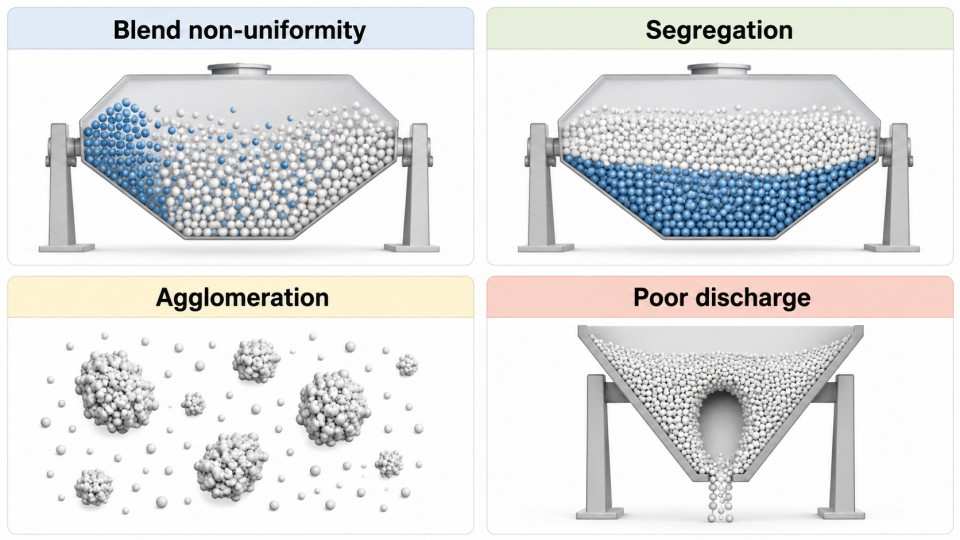
problemas comunes de mezcla de polvos
Un proceso típico de formas farmacéuticas sólidas puede incluir:
Dosificación de materias primas
→ tamizado o molienda cuando sea necesario
→ premezcla
→ granulación cuando sea necesario
→ secado y clasificación por tamaño
→ mezcla final
→ compresión de tabletas o llenado de cápsulas
→ envasado
No todas las formulaciones utilizan cada etapa. Las mezclas para compresión directa pueden pasar a una prensa de tabletas cuando las propiedades del material y los datos de desarrollo respaldan esa ruta. Los productos granulados en húmedo requieren la distribución del aglutinante antes del secado y la mezcla final.
Las formulaciones de cápsulas también necesitan un flujo estable del polvo y resistencia a la segregación para una alimentación constante en la máquina llenadora de cápsulas. Por lo tanto, el mezclador farmacéutico es una parte de un proceso de fabricación conectado y no una solución de calidad aislada.
No existe un único mezclador farmacéutico que sea el mejor para todos los polvos o gránulos. Los mezcladores tipo V proporcionan una mezcla por volteo suave y económica para muchas mezclas secas de flujo libre. Los mezcladores 3D utilizan un movimiento multidireccional del recipiente cuando se requiere una trayectoria del polvo más compleja. Los mezcladores de doble cono, los mezcladores de contenedor, los mezcladores de cinta y los granuladores mezcladores de alta cizalla atienden diferentes necesidades de materiales y procesos.
Una selección adecuada comienza con las propiedades del material, el volumen del lote, el rango de llenado, la alimentación, la descarga, la transferencia, la limpieza y el procesamiento posterior. Después, las pruebas con material real deben confirmar que el proceso completo, no solo el mezclador, puede ofrecer un rendimiento repetible.
Los términos a menudo se superponen. “Blender” suele referirse a equipos para polvos secos y gránulos, mientras que “mixer” es un término más amplio que puede incluir equipos de mezclado en seco, mezclado húmedo y granulación.
Ningún diseño es el mejor para todos los polvos secos. Los materiales de flujo libre suelen adaptarse a los mezcladores de tambor, mientras que los polvos cohesivos pueden requerir una acción convectiva más intensa, cambios en la formulación o granulación.
Un mezclador de tipo V gira principalmente alrededor de un eje y divide y recombina repetidamente el lecho de polvo. Un mezclador 3D mueve el recipiente en varias direcciones, creando una trayectoria del material más compleja.
El rango de llenado correcto depende de la geometría del recipiente, la densidad aparente del polvo, el comportamiento de flujo y el rango operativo probado por el fabricante. No debe aplicarse un porcentaje universal a todos los mezcladores y formulaciones.
El tiempo de mezclado debe establecerse mediante el desarrollo del proceso y un muestreo representativo. El punto final depende de la formulación, la máquina, la velocidad, el nivel de llenado, la secuencia de carga y el riesgo de segregación o sobrelubricación.

29+ years in pharmaceutical machinery, covering capsule filling, tablet pressing, blister packaging, tablet and capsule counting, cartoning, GMP production, and overseas machine service.

Correo electrónico : manager@richpacking.cn
Building D, No. 226, Beishan Qiaotou Street, Haizhu District, Guangzhou City, Guangdong Province, China


 Red IPv6 admitida