






 Casa
Casa Productos
29+ years in pharmaceutical machinery, covering capsule filling, tablet pressing, blister packaging, tablet and capsule counting, cartoning, GMP production, and overseas machine service.

Una botella de medicamento sellada puede parecer completa y aun así estar con menos contenido. Un cartón terminado puede no tener un prospecto o una tarjeta blíster, mientras que un sobre puede contener menos producto del previsto. A la velocidad de producción, estos errores son difíciles de encontrar solo mediante comprobaciones visuales y pueden provocar retrabajos, reclamaciones e investigaciones de lotes.
Una controladora de peso ayuda a identificar estos problemas al pesar cada envase a medida que avanza por la línea. Compara el peso medido con límites preestablecidos y retira los envases que quedan fuera del rango aceptado. En las líneas de envasado farmacéutico, la inspección puede realizarse después del conteo, llenado, sellado o estuchado, según lo que deba comprobarse.
La máquina detecta desviaciones de peso, no su causa exacta. Puede indicar un componente faltante solo cuando la diferencia es suficientemente grande como para medirse de forma fiable. Por esta razón, el control de peso funciona junto con sistemas de conteo, visión y detección de metales en lugar de reemplazarlos.
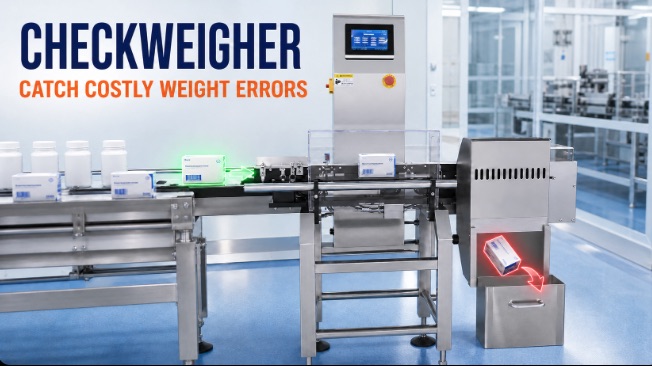
Una controladora de peso es un sistema automático de inspección de peso instalado dentro de una línea de producción o envasado. A diferencia de una báscula estática, que requiere que un operario detenga y pese un producto, una controladora de peso en línea mide envases individuales mientras están en movimiento. Luego clasifica cada resultado como aceptable, con peso inferior o con peso superior.
La secuencia básica de inspección es sencilla:
Separación de productos → pesaje dinámico → procesamiento de señales → comparación de tolerancias → aceptación o rechazo
Un sistema típico tiene un transportador de entrada que separa y estabiliza los productos, un transportador de pesaje montado sobre una célula de carga, un controlador que evalúa la señal y un dispositivo de rechazo. Cuando un envase supera el límite superior o inferior aprobado, el mecanismo de rechazo lo retira del flujo de producción.
El sistema mide el peso total del envase en su punto de instalación. La medición de una botella puede incluir el recipiente, el medicamento y la tapa, mientras que la medición de un cartón también puede incluir tarjetas blíster y un prospecto. Si un componente faltante o adicional crea una diferencia medible, el envase puede rechazarse. Sin embargo, la máquina no cuenta directamente las tabletas ni identifica qué componente causó la desviación.
Por lo tanto, el mejor punto de instalación depende del objetivo de inspección. Una unidad colocada después del llenado o conteo puede detectar errores de forma temprana, mientras que una instalada después del estuchado puede comprobar la integridad del envase terminado. En ambos casos, su función principal es la misma: realizar una inspección continua de peso y evitar que los envases fuera de rango sigan avanzando por la línea.
Una controladora de peso dinámica debe obtener una lectura estable del peso durante el breve tiempo en que un envase cruza el transportador de pesaje. Por lo tanto, los resultados precisos dependen tanto del movimiento controlado del producto como del sensor de pesaje.
El transportador de entrada crea una separación constante entre envases para que solo un producto ocupe la sección de pesaje a la vez. Los rieles guía o las correas laterales ayudan a mantener erguidas las botellas altas y los cartones estrechos. Si dos envases se superponen, se tocan o rebotan al entrar en la cinta de pesaje, el resultado no representará correctamente a ninguno de los dos.
A medida que el envase se desplaza por el transportador de pesaje, la célula de carga convierte la fuerza aplicada en una señal eléctrica. El controlador filtra la señal, calcula el peso y lo compara con los límites inferior y superior almacenados en la receta del producto.
Un envase dentro del intervalo aceptado continúa aguas abajo. Uno por debajo del límite inferior se clasifica como de peso insuficiente, mientras que uno por encima del límite superior se clasifica como de peso excesivo. La división de escala mostrada por sí sola no demuestra que la máquina pueda detectar un defecto específico a velocidad de producción. La repetibilidad con el envase real, la velocidad del transportador y el entorno de fábrica es más importante.
Un sistema de rechazo de una controladora de peso fiable sigue el envase defectuoso hasta el punto de rechazo y activa un soplador de aire, un empujador, un desviador, un mecanismo de caída u otro dispositivo adecuado para el envase. Un cartón rígido puede admitir una acción de rechazo diferente a la de una botella inestable o un sobre ligero.
Para la producción farmacéutica controlada, el proceso de rechazo también puede incluir un sensor de confirmación y un contenedor de recogida con cierre. Estas funciones ayudan a demostrar que se retiró el envase correcto y evitan que los productos rechazados vuelvan al flujo aceptado. Según la configuración del sistema, los registros de producción pueden incluir conteos de aceptados y rechazados, peso promedio y tendencias de peso de cada lote.
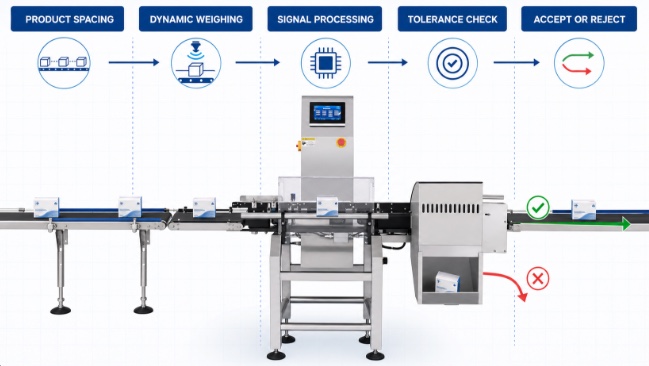
Principio de funcionamiento de una controladora de peso desde la separación del producto hasta el rechazo automático
Una controladora de peso puede detectar un error solo cuando este cambia el peso medido del envase lo suficiente como para superar un límite validado. Por lo tanto, la capacidad práctica de detección varía según el producto, los materiales de envasado, la posición de la línea y la variación normal del peso.
Después de unamáquina contadora de tabletas y cápsulas, una controladora de peso puede identificar botellas que son mediblemente más ligeras o pesadas de lo esperado. Una lectura baja puede deberse a tabletas, cápsulas o producto faltante, mientras que una lectura alta puede indicar un llenado excesivo o un componente adicional.
El resultado sigue siendo una decisión basada en el peso total, no un segundo conteo. Las variaciones de la botella vacía, la tapa, la etiqueta y las unidades de dosificación individuales pueden coincidir con el peso de una tableta faltante. Por lo tanto, las botellas de muestra que representen el defecto mínimo requerido deben probarse a la velocidad normal de la línea antes de aceptar la afirmación de detección.
En las líneas de envasado blíster, la inspección de peso puede realizarse en una tarjeta blíster individual o después del estuchado. La comprobación temprana puede reducir el desperdicio de cartones y prospectos, mientras que la comprobación del cartón terminado proporciona una evaluación más completa del envase final. Un cartón ligero puede indicar una tarjeta blíster o un prospecto faltante si esa diferencia supera la variación normal del envase.
Para sobres y envases tipo stick, el control de peso puede identificar faltantes y excesos de llenado medibles. También puede ayudar a encontrar un sobre faltante en un multipack. Los envases inestables o flexibles requieren una transferencia controlada a la cinta de pesaje porque los pliegues, el aire atrapado y la orientación inconsistente pueden reducir la repetibilidad.
El peso por sí solo no puede confirmar la identidad del producto, la calidad de impresión, la integridad del sellado, el color de la tableta o el tipo de componente faltante. Tampoco puede identificar contaminación metálica. Esas tareas requieren otros controles, como un sistema de visión, una prueba de fugas, una inspección de códigos o undetector de metales farmacéutico. Un plan de inspección sólido asigna cada riesgo a la tecnología que realmente puede medirlo.
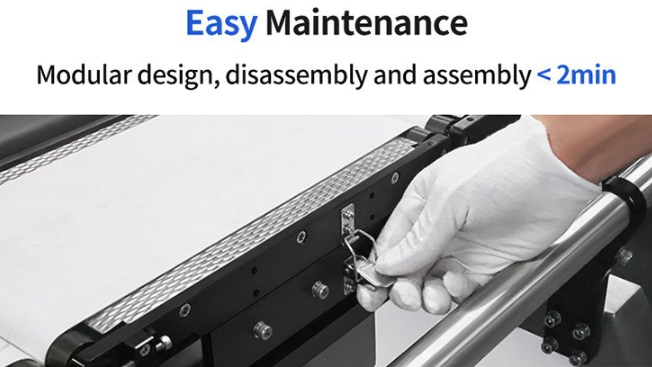
La selección debe comenzar con el defecto que debe detectarse, no con la mayor velocidad anunciada ni con el menor incremento de peso mostrado. La máquina también debe funcionar con los demás equipos de inspección y envasado que la rodean.
|
Sistema |
Comprobación principal |
Hallazgo típico |
Limitación principal |
|
Controladora de peso |
Peso total del envase |
Llenado insuficiente, llenado excesivo o un componente faltante que crea una diferencia de peso medible |
No identifica la causa exacta de la desviación |
|
Máquina contadora de tabletas y cápsulas |
Número de tabletas o cápsulas dispensadas |
Conteo incorrecto de piezas durante el llenado de frascos |
No verifica el peso total ni la integridad del envase terminado |
|
Detector de metales |
Contaminación detectable ferrosa, no ferrosa o de acero inoxidable |
Contaminación metálica por encima de la sensibilidad validada |
No comprueba el peso, la impresión ni los componentes no metálicos faltantes |
|
Inspección por visión |
Presencia visible, posición, forma, color, código o características de la etiqueta |
Elementos visibles faltantes o desalineados y defectos de impresión |
Limitada a las características que la cámara puede ver y que ha sido configurada para inspeccionar |
Estos sistemas son complementarios. Por ejemplo, la máquina contadora controla cuántas tabletas entran en un frasco, la inspección de peso comprueba el total resultante y la inspección por visión o metales aborda riesgos que el peso no puede revelar.
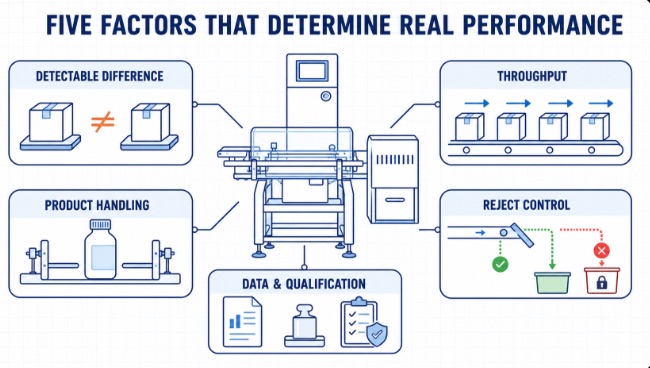
1. Diferencia de peso detectable:Defina el defecto más pequeño que debe encontrarse. Mida la variación normal del producto, envase, tapa, prospecto y otros componentes antes de establecer el rango de aceptación.
2. Velocidad de producción y separación del producto:Confirme los envases requeridos por minuto y el espacio disponible entre productos. Una mayor velocidad deja menos tiempo para estabilizar y pesar cada envase.
3. Manipulación del envase y entorno:Considere la estabilidad del frasco, el comportamiento de los envases flexibles, las transferencias del transportador, la vibración del suelo y el movimiento del aire. Estos factores pueden importar más que la resolución nominal de la celda de carga.
4. Control de rechazo:Adapte el dispositivo de rechazo al envase, luego defina la confirmación del rechazo, el acceso al contenedor, las condiciones de alarma y la respuesta ante la pérdida de aire comprimido o un contenedor de rechazo lleno.
5. Datos y cualificación:Especifique el acceso a recetas, informes de lote, registros de calibración, copias de seguridad, pistas de auditoría y comunicación con los controles de línea de acuerdo con el sistema de calidad del sitio.
Para la fabricación de medicamentos en EE. UU., 21 CFR 211.68 exige que los equipos automatizados utilizados en el envasado de medicamentos se calibren, inspeccionen o comprueben rutinariamente bajo un programa escrito, con registros mantenidos. La lección práctica es que el sistema debe seleccionarse junto con su método de prueba, documentación y verificaciones rutinarias de rendimiento, no como una báscula transportadora aislada.
Rich Packing puede configurar unacontroladora de peso de alta precisióncomo estación de inspección independiente o integrarla en una amplialínea de envasado farmacéutico. El diseño de la línea debe basarse en muestras reales de envases, rendimiento requerido, límites de inspección y la lógica de rechazo prevista.
Una controladora de peso convierte el peso del envase en una decisión automática de aceptación o rechazo a velocidad de producción. Su valor proviene de detectar desviaciones medibles de forma constante, retirar los envases defectuosos y generar registros que respaldan el control del proceso.
La máquina solo es eficaz cuando sus límites coinciden con la variación real del envase y su ubicación coincide con el defecto que se comprueba. Utilizada junto con conteo, visión, detección de metales y pruebas de rendimiento documentadas, la inspección de peso se convierte en un paso específico de control de calidad en lugar de una promesa sin respaldo de que una sola máquina puede inspeccionar todos los riesgos.
Preguntas frecuentes
Una báscula normal generalmente pesa un artículo estacionario y depende de un operador para colocarlo, leer el peso y retirarlo. Una controladora de peso en línea pesa productos en movimiento, compara cada resultado con límites preestablecidos y puede rechazar automáticamente un envase fuera de rango sin detener la producción normal.
Solo cuando la tableta faltante crea una diferencia de peso mayor que la variación combinada de las tabletas, el frasco, la tapa y el proceso de pesaje. El método correcto es ejecutar muestras de prueba a la velocidad normal de producción y confirmar una detección repetible antes de confiar en un límite de rechazo de una sola tableta.
Instálela donde el defecto objetivo se vuelva medible por primera vez. Después del conteo o llenado, puede rechazar errores antes de que se utilice más material de empaque. Después del taponado o estuchado, puede evaluar un envase más completo. Algunas líneas utilizan más de un punto de inspección para diferentes riesgos.
No existe un valor de precisión universal. El sistema debe separar de forma confiable los envases aceptables del defecto definido más pequeño a la velocidad de línea requerida. La estabilidad del producto, la variación del peso tara, las condiciones ambientales y la repetibilidad deben incluirse en la evaluación del rendimiento.
No siempre. La decisión debe basarse en una evaluación de riesgos del producto y del proceso. Una controladora de peso es más valiosa cuando el peso del envase proporciona una forma confiable de identificar llenados insuficientes, llenados excesivos o componentes faltantes y cuando la inspección continua ofrece un mejor control que el muestreo por sí solo.
Referencias
1. OIML R 51-1: Instrumentos automáticos de pesaje de control, Parte 1—Requisitos metrológicos y técnicos—Ensayos. Organización Internacional de Metrología Legal.
https://www.oiml.org/en/files/pdf_r/r051-1-e06.pdf/@@download/file/R051-1-e06.pdf
2. Manual NIST 44—2026: Especificaciones, tolerancias y otros requisitos técnicos para dispositivos de pesaje y medición. Instituto Nacional de Estándares y Tecnología.

29+ years in pharmaceutical machinery, covering capsule filling, tablet pressing, blister packaging, tablet and capsule counting, cartoning, GMP production, and overseas machine service.

Correo electrónico : manager@richpacking.cn
Building D, No. 226, Beishan Qiaotou Street, Haizhu District, Guangzhou City, Guangdong Province, China


 Red IPv6 admitida