






 Casa
Casa Productos

29+ years in pharmaceutical machinery, covering capsule filling, tablet pressing, blister packaging, tablet and capsule counting, cartoning, GMP production, and overseas machine service.

¿Te has fijado alguna vez en la estructura de las cápsulas? Algunas cápsulas de gel no parecen tener ningún adhesivo, pero son completamente herméticas. ¿Cómo se consigue esto?
En la industria de suplementos nutricionales y farmacéutica, el sellado de las cápsulas es fundamental para garantizar la calidad del producto. Cualquier espacio entre la tapa y el cuerpo de la cápsula puede provocar fugas, reduciendo significativamente la eficacia del medicamento. Esto es especialmente cierto en el caso de productos líquidos como las cápsulas de omega-3, donde los requisitos de sellado son aún más estrictos. Los métodos de sellado varían considerablemente según el contenido. Este artículo revelará las técnicas para lograr cápsulas perfectamente selladas y mostrará cómo se sellan de forma más eficaz en la producción real.
Conclusiones clave
● Definición de sellado de cápsulas y por qué es importante
● Las diferencias entre cápsulas duras cápsulas blandas y cápsulas duras rellenas de líquido
● Métodos comunes de sellado de cápsulas: su justificación, ventajas y desventajas.
● Proceso paso a paso de cómo se sellan las cápsulas en la fabricación real.
● Máquinas utilizadas para el sellado de cápsulas y cómo funcionan
● Principales desafíos en el sellado de cápsulas líquidas y cómo Rich Packing los aborda.

El sellado de la cápsula se refiere a la formación de una estructura fuerte y cerrada entre la tapa y el cuerpo de la cápsula, que actúa como un escudo protector para evitar interferencias externas con el medicamento o la eficacia del principio activo. Esta definición básica de cápsula es especialmente importante cuando el producto contiene aceites, líquidos o polvos sensibles a la humedad. Un buen sellado ayuda a prevenir fugas, oxidación, difusión de olores y absorción de humedad.
Cuando la gente pregunta cómo se sellan las cápsulas, generalmente se refieren a una de dos cosas:
Cápsulas duras de doble capa con cierre y sellado.
sellar una cápsula blanda de una sola pieza, como una cápsula blanda, durante o después de la formación.
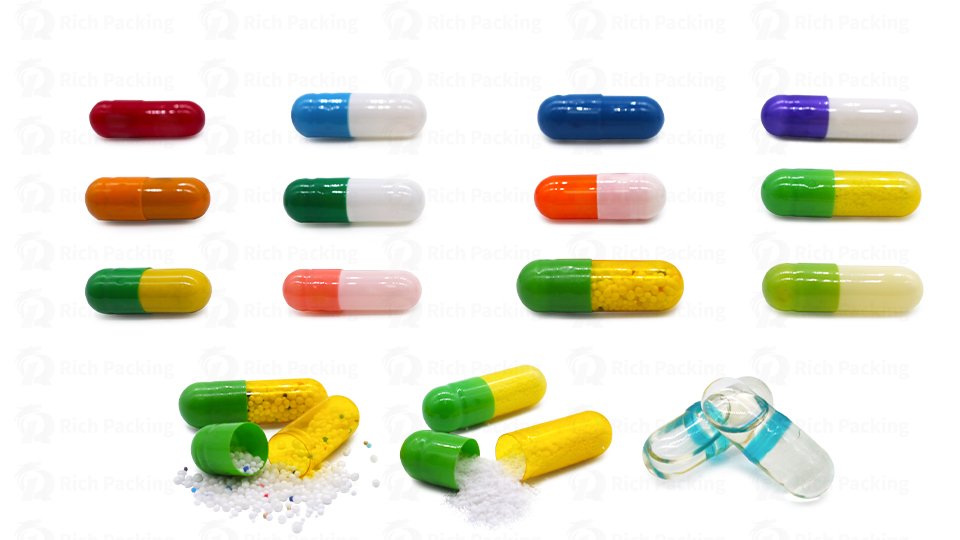
Las cápsulas duras de dos piezas, un tipo de cápsula tradicional, constan de un cuerpo y una tapa. Con registros que se remontan a mediados del siglo XIX, estas cápsulas se encuentran comúnmente en medicamentos que se venden en farmacias y hospitales, como las cápsulas de sellado tipo dominó; otras cápsulas, como las cápsulas de HPMC, también adoptan esta estructura.
Siempre que el relleno sea sólido, estas cápsulas generalmente no requieren un sellado secundario. El diseño estructural de la tapa permite que la cápsula se cierre de forma relativamente hermética tras pasar por la estación de bloqueo. Sin embargo, en algunas aplicaciones, los fabricantes pueden sellar las cápsulas de gelatina dura para mejorar la evidencia de manipulación o reducir el riesgo de separación durante el transporte.
Las cápsulas duras rellenas de líquido son una rama de las cápsulas de dos piezas. Se utilizan ampliamente para rellenar suplementos alimenticios oleosos o acuosos. Productos de suplementos como cápsulas de aceite de pescado Las cápsulas de omega-3 y las vitaminas liposolubles utilizan esta estructura.
Dado que estas cápsulas contienen líquido, son más propensas a fugas que las de polvo y gránulos. Por ello, algunas cápsulas líquidas se sellan mediante un proceso de banda, aplicando una banda de gelatina alrededor de la unión. Otros fabricantes utilizan el sellado por fusión, empleando alcohol para disolver ligeramente la interfaz de la cápsula, logrando que la tapa y el cuerpo se fusionen.
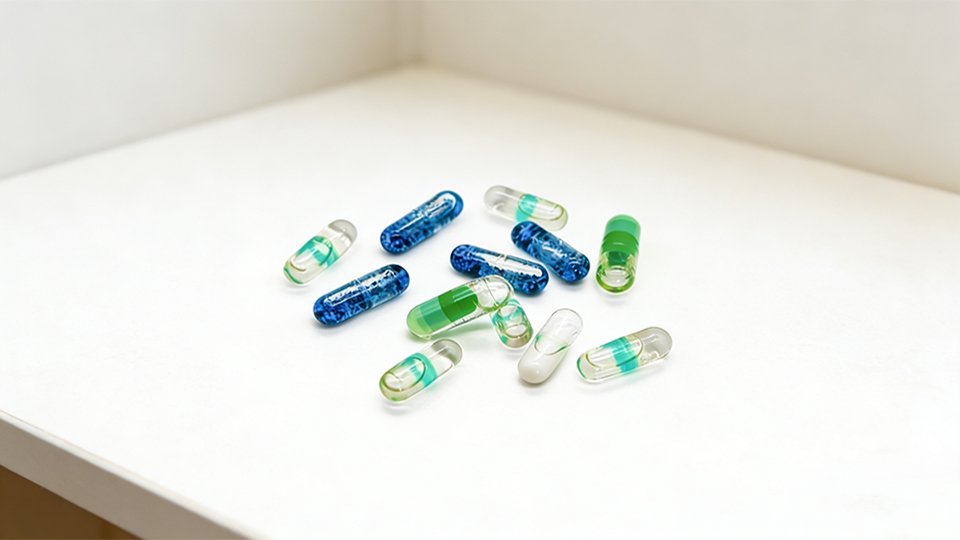
Existen diferencias estructurales entre las cápsulas blandas y las cápsulas duras, que están estrechamente relacionadas con el método de sellado. A diferencia de la estructura separada de las cápsulas de dos piezas, las cápsulas blandas:
● Utilice una carcasa exterior sellada de una sola pieza.
● Normalmente, el llenado y el sellado se realizan en un solo paso.
● Se utiliza comúnmente para ingredientes activos líquidos y a base de aceite.
● Más fácil de tragar
Las cápsulas de gel blando se forman típicamente mediante cintas de gel calentadas en ambos lados que se unen en los rodillos formadores, se rellenan con líquido y se les da forma mediante presión. Por lo tanto, se logra un buen sellado sin necesidad de un sellado secundario. Esta es una de las razones por las que el método de sellado de las cápsulas de gel depende de si el producto es una cápsula blanda o una cápsula dura rellena de líquido.
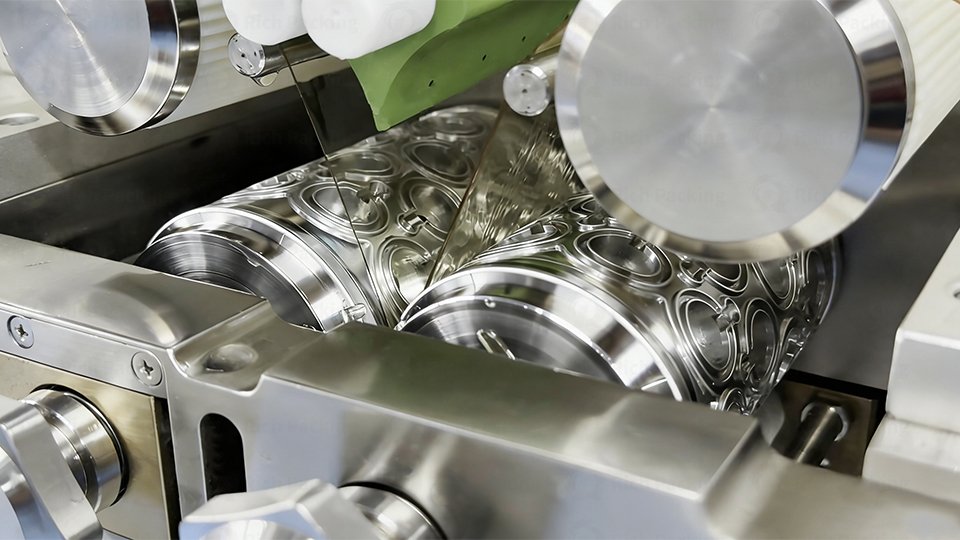
Este es el meollo del tema. Si tu público busca información sobre cómo se sellan las cápsulas, esta es la sección que realmente les interesa.
A continuación se describen los métodos de sellado más comunes utilizados en la industria, que le ayudarán a comprender mejor cómo sellar cápsulas.
Tabla 1 - Métodos comunes de sellado de cápsulas
|
Método |
Principio |
Utilizado para |
|
Sellado de la banda de la cápsula |
Se aplica una banda de gelatina o HPMC alrededor de la costura. |
Cápsulas rellenas de líquido, cápsulas de aceite de pescado, productos omega-3 |
|
Sellado por fusión |
La costura se ablanda y se adhiere con calor. |
Cápsulas de gelatina dura, algunas cápsulas de HPMC |
|
Sellado por micropulverización |
Se rocía una pequeña cantidad de solución selladora sobre la junta. |
Cápsulas duras, líneas automatizadas |
|
Líquido de sellado / Sellado con disolvente |
Un líquido sellador ayuda a cerrar la costura después del secado. |
Algunos procesos especializados o más antiguos |
|
Sellado térmico puntual |
Se aplica calor a puntos seleccionados de la articulación de la cápsula. |
Determinadas aplicaciones de cápsulas duras |
Sellado de la banda de la cápsula
Este es uno de los métodos de sellado más utilizados en la producción de nutracéuticos y productos farmacéuticos. Se aplica comúnmente para sellar cápsulas de aceite, ya que ayuda a reducir las fugas. La banda de color también mejora la apariencia del producto y el reconocimiento de la marca. Como se menciona en Tablets & Capsules, el uso de bandas ofrece beneficios como la prevención de fugas, una mayor visibilidad de la marca y evidencia de manipulación.
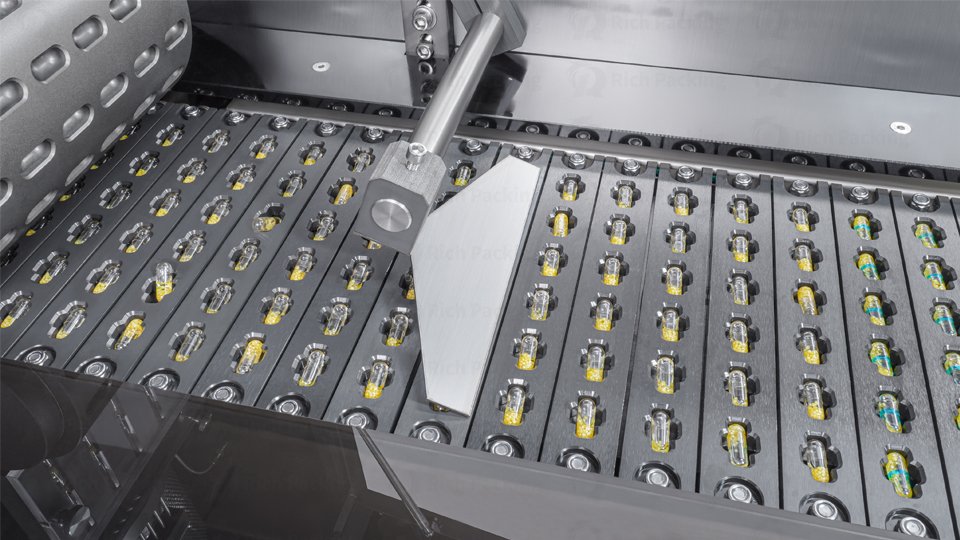
Sellado por fusión
El sellado por fusión se centra en la unión del sello en sí. Es más parecido a soldar la costura de la cápsula que a añadir una tira de sellado exterior. Esta técnica requiere un control más preciso, pero el resultado final es un sellado más limpio. Al comparar el sellado con banda con el sellado por fusión, los fabricantes suelen tener en cuenta la apariencia, la compatibilidad y el riesgo de fugas.
Sellado por micropulverización
Este método utiliza pulverización localizada, lo que permite un control más preciso del área de sellado. Según la descripción técnica de CapsCanada, el sellado por micropulverización reduce el punto de fusión en la unión y favorece la adhesión. Sin embargo, este método de sellado controlado con cápsulas líquidas requiere una supervisión minuciosa durante el calentamiento para evitar burbujas o deformaciones.
Sellado con disolvente
Este es un método tradicional que se utilizaba antiguamente. Consiste en ablandar primero la unión de la cápsula y luego sellarla tras el secado. Actualmente, este método se usa con menos frecuencia, ya que las líneas de producción modernas tienden a emplear métodos más estables y controlables. En algunas aplicaciones especializadas, los fabricantes aún lo utilizan para sellar cápsulas de gelatina dura.
Sellado térmico puntual
Este método es sencillo de usar y requiere menos material. Sin embargo, el sellado es menos eficaz, por lo que no es adecuado para productos con sellado líquido que requieren un alto rendimiento. Generalmente, no se prefiere cuando los fabricantes necesitan una cápsula sellada de alta fiabilidad.
Sellado con banda para cápsulas duras rellenas de líquido
En el proceso de sellado con banda, los fabricantes primero separan y ordenan las cápsulas vacías, luego llenan el cuerpo de la cápsula con líquido y la cierran. Tras un breve periodo de reposo para estabilizar la presión interna, se aplica una banda de sellado alrededor de la unión entre la tapa y el cuerpo. Posteriormente, las cápsulas se secan, se inspecciona la calidad del sellado y las unidades defectuosas se desechan antes del empaquetado final.
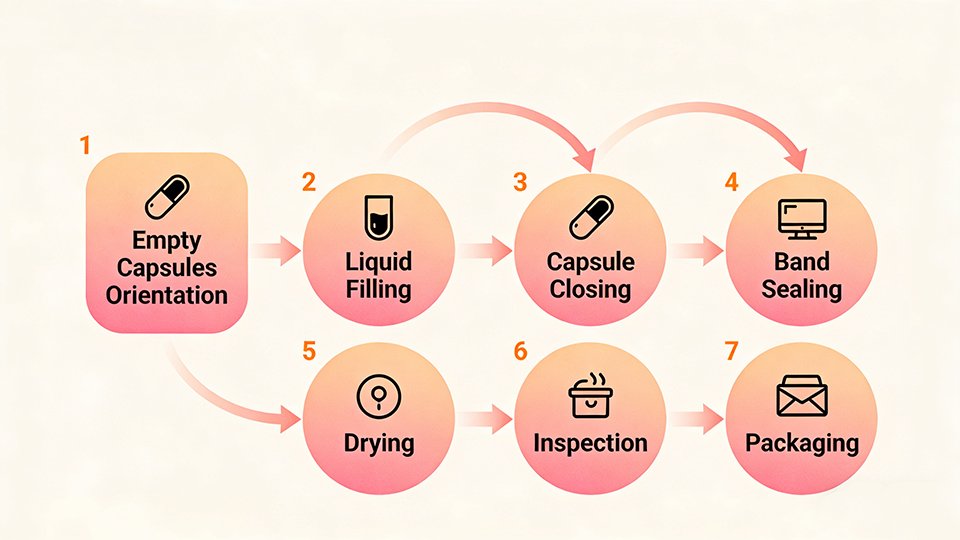
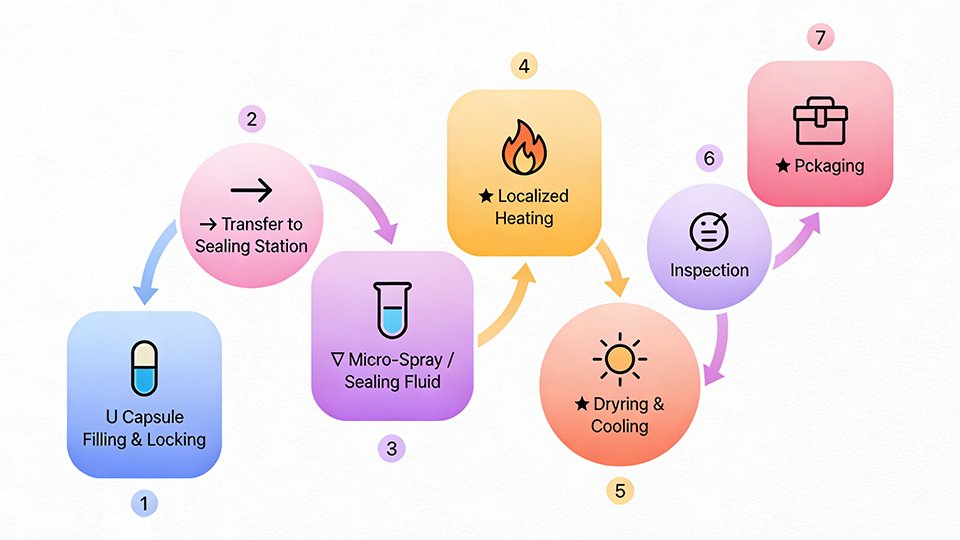
Sellado por fusión o micropulverización
En el proceso de sellado por fusión o microaspersión, las cápsulas de gel duro se llenan y sellan, y luego se transfieren a una estación de sellado. Se rocía líquido sellador o microaspersión en la unión, seguido de un calentamiento localizado para unir la tapa y el cuerpo. Tras el secado y enfriamiento, las cápsulas se inspeccionan para detectar fugas o deformaciones; solo los productos que cumplen con los requisitos pasan a la etapa de envasado.
Sellado de cápsulas blandas
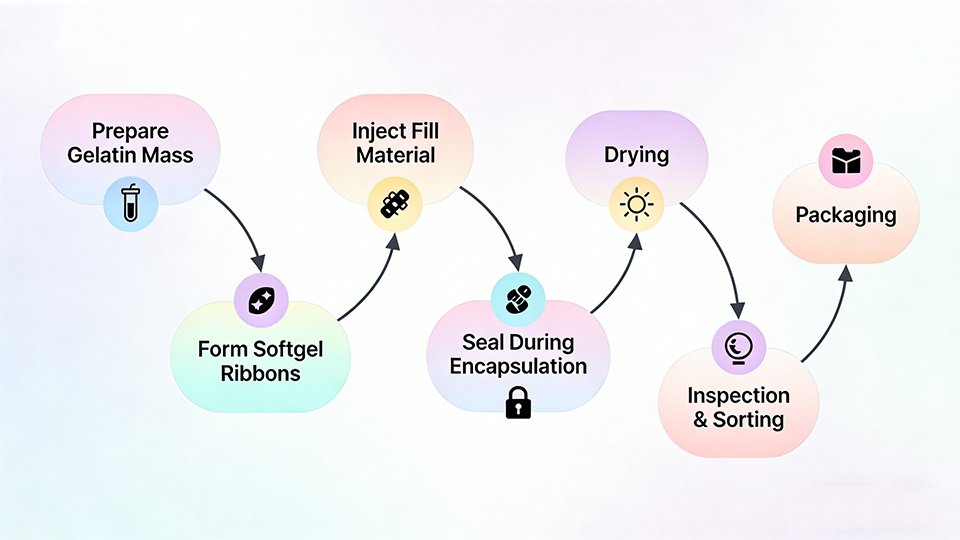
El proceso de sellado de las cápsulas blandas es diferente. Primero se prepara la gelatina y luego se le da forma de cintas. El material de relleno se inyecta durante la encapsulación, y la cápsula blanda se sella simultáneamente. Posteriormente, las cápsulas blandas se secan, se inspeccionan y se envasan en cápsulas con aceite sellador.
Si el proceso es la receta, la máquina es la cocina. Las diferentes operaciones requieren equipos diferentes según la producción, el tipo de llenado y la integridad del sellado requerida.
Entre las máquinas más comunes utilizadas para el sellado de cápsulas se incluyen:
Máquina de encapsulado: se utiliza para aplicar una banda de gelatina o HPMC alrededor de la unión de la cápsula.
Máquina de sellado por micropulverización: pulveriza el líquido de sellado en una posición específica para un sellado preciso.
Unidad de secado de cápsulas: Se utiliza para secar las cápsulas blandas una vez formadas.
Máquina semiautomática de llenado de cápsulas líquidas: adecuada para producción piloto, pruebas y lotes pequeños.
Máquina automática de llenado de cápsulas líquidas : utilizado para aplicaciones continuas a gran escala llenado de cápsulas y sellado.
En la producción, el sellado perfecto de las cápsulas depende en gran medida de la concentricidad del molde de la máquina, la precisión del llenado y la exactitud de la caja de indexación. Incluso pequeñas desviaciones pueden provocar fugas de sólidos o líquidos, o incluso arrugas y roturas en la cápsula. Rich Packing, con más de 30 años de experiencia en I+D, posee un profundo conocimiento del llenado, el cierre y el sellado de cápsulas, conocimiento que se refleja plenamente en sus máquinas.
A continuación se describen los problemas comunes que surgen cuando los fabricantes producen cápsulas e intentan solucionar el problema del sellado.
Fugas en la unión entre la tapa y el cuerpo: los aceites y líquidos pueden escaparse fácilmente a través de pequeñas rendijas.
Separación incompleta entre la tapa y el cuerpo: La tapa y el cuerpo no están correctamente separados, lo que puede tener un impacto negativo en el llenado y el sellado.
Inexactitud en el llenado: una dosificación inexacta puede provocar pérdidas de producto e inconsistencias.
Deformación de la cápsula: unas condiciones de calor o secado inadecuadas pueden dañar la cubierta de la cápsula.
En la práctica, unos buenos métodos de sellado de cápsulas dependen del equilibrio adecuado entre el material de la cápsula, la precisión del llenado, el fluido de sellado y el control del secado.
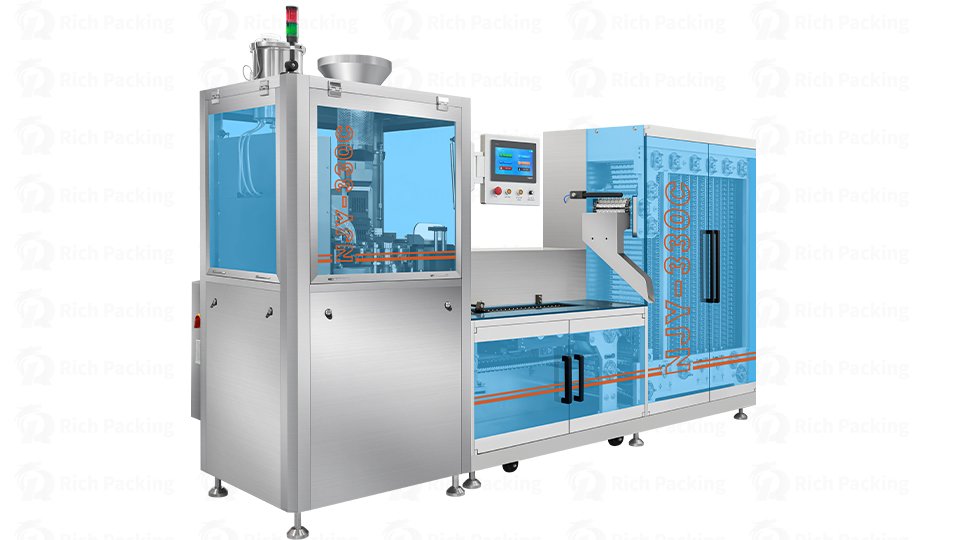
Ya sea de tipo semiautomático o totalmente automático, la serie NJY de Rich Packing está diseñada para fabricantes que necesitan un llenado preciso y un sellado perfecto con:
● Servomotor de alta precisión para un llenado de líquidos exacto.
● Sellador compatible con el material de la cápsula para un sellado perfecto.
● Sistema de monitorización en tiempo real: no se requiere llenado de líquido para los defectuosos.
Si comparamos una máquina semiautomática de llenado de cápsulas líquidas para desarrollo con una máquina automática para producción comercial, la pregunta clave es simple: ¿puede el sistema controlar los detalles que realmente causan fugas? En el sellado, los detalles lo son todo. Si desea obtener más información, no dude en contactarnos.
Para los fabricantes, el sellado perfecto de cápsulas es un desafío constante. Ya sea que elija el sellado con banda, el sellado por fusión u otro método, el objetivo siempre es lograr un sellado estable y de alta calidad. Si desea actualizar su máquina de encapsulado, Rich Packing está siempre a su disposición para brindarle asistencia.
P1: ¿Por qué debe estar sellada la cápsula?
El hecho de que una cápsula cerrada no se pueda sellar correctamente hace que el sellado sea importante para ayudar a prevenir fugas y la entrada de humedad.
P2: ¿Cuáles son los tres tipos principales de cápsulas?
Los tres tipos generales de los que habla la mayoría de la gente son:
● Cápsulas de gelatina dura
● Cápsulas duras vegetarianas (cápsulas de HPMC)
● Cápsulas blandas
P3: ¿Cómo tomar las cápsulas líquidas?
En la mayoría de los casos, debe tomarlos enteros. No los mastique ni los abra descuidadamente, especialmente si se trata de productos a base de aceite.
[1] Grand View Research: Informe sobre el tamaño, la cuota de mercado y el crecimiento del mercado de cápsulas vacías
https://www.grandviewresearch.com/industry-analysis/empty-capsules-market
[2] Tabletas y cápsulas: Pregunte a un experto: ¿Por qué usar bandas para las cápsulas?
https://www.tabletscapsules.com/3641-Artículos-Técnicos/586241-Pregunte-a-un-Experto/
[3] Blog de CapsCanada: Tipos de sellado para cápsulas rellenas de líquido

29+ years in pharmaceutical machinery, covering capsule filling, tablet pressing, blister packaging, tablet and capsule counting, cartoning, GMP production, and overseas machine service.

Correo electrónico : manager@richpacking.cn
Building D, No. 226, Beishan Qiaotou Street, Haizhu District, Guangzhou City, Guangdong Province, China


 Red IPv6 admitida