






 Casa
Casa Productos
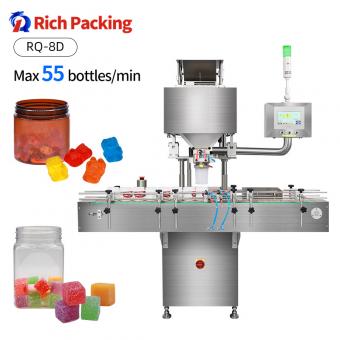
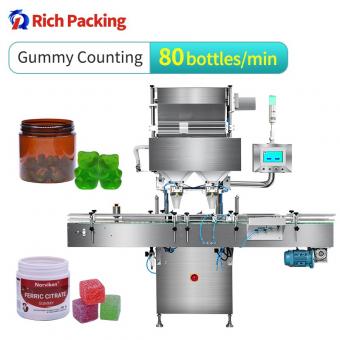
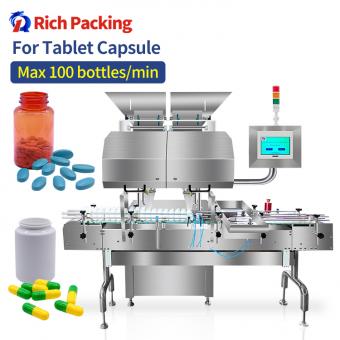
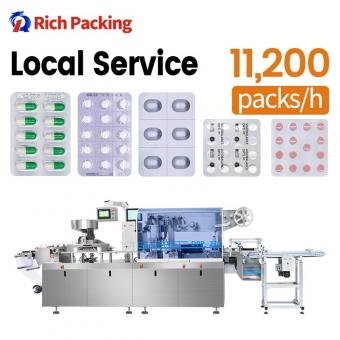
29+ years in pharmaceutical machinery, covering capsule filling, tablet pressing, blister packaging, tablet and capsule counting, cartoning, GMP production, and overseas machine service.

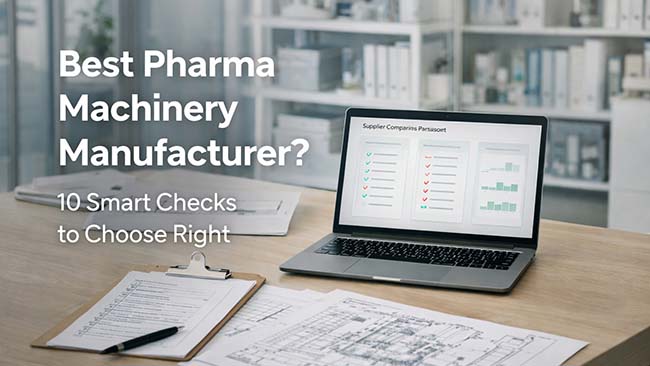
Elegir un fabricante de maquinaria farmacéutica parece sencillo: comparar especificaciones, obtener presupuestos y elegir una marca conocida. En la práctica, la mayoría de los problemas surgen más adelante: retrasos en los plazos, documentación deficiente, servicio lento y pequeños fallos de diseño que se convierten en grandes problemas de validación y disponibilidad. Esta guía le ofrece una forma práctica de decidir quién es realmente la mejor opción para usted, tanto si es nuevo en el sector de los equipos farmacéuticos como si ya tiene experiencia y simplemente desea evitar sorpresas.
Repasaremos 10 comprobaciones inteligentes que puede utilizar para comparar cualquier proveedor de maquinaria farmacéutica o fabricante de equipos farmacéuticos —desde tu primera lista de candidatos hasta FAT/SAT y el apoyo a largo plazo. Pero primero necesitas algo que muchos equipos pasan por alto.
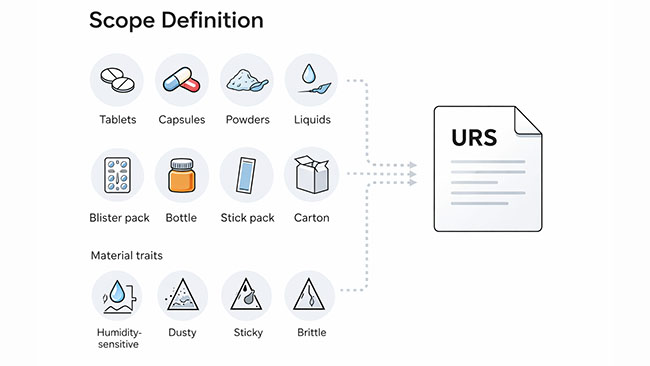
Si quieres comparaciones claras, necesitas un alcance claro. De lo contrario, todos los proveedores "parecerán buenos" sobre el papel porque no estás formulando la misma pregunta de la misma manera.
Piensa en este paso como la transformación de una idea vaga («necesitamos una línea») en una especificación de requisitos de usuario (URS, por sus siglas en inglés) sencilla y fácil de entender para el comprador. No tiene por qué ser formal ni intimidante; simplemente debe ser lo suficientemente específica como para que dos fabricantes puedan ofrecerte respuestas similares.
●
Realidad del producto y del proceso
Forma farmacéutica (
tabletas
, cápsulas, polvos, gránulos, pellets, líquidos), formato de envasado (
blísteres
, botellas, sobres/paquetes individuales, cartones), además del comportamiento del material (sensible a la humedad, polvoriento, pegajoso, quebradizo).
●
Ritmo de producción y de lotes
Cantidad objetivo de paquetes por hora, patrón de turnos, tamaños de lote y frecuencia de cambio de formato. La alta velocidad no sirve de nada si los cambios de formato consumen todo el día.
●
Destino de calidad y cumplimiento
El lugar donde se venderá el producto y las normas que debe cumplir (expectativas de cGMP/GMP, exhaustividad de la documentación, requisitos de datos). Esto afecta directamente a lo que el fabricante debe entregar, no solo la máquina.
●
Restricciones de las instalaciones
Superficie ocupada, altura del techo, vías de acceso, servicios (electricidad, aire comprimido, vacío, refrigeración) y requisitos de limpieza. Estos son factores que suelen ser determinantes para descartar una opción.
●
Nivel de automatización y plan de personal
¿Prefiere un sistema fácil de usar con medidas de seguridad o un rendimiento optimizado por ingenieros? ¿Quién lo manejará a diario y qué tan familiarizado está con la resolución de problemas?
●
Cronograma e integración
Fecha de envío requerida, período de instalación y si debe integrarse con equipos anteriores o posteriores (por ejemplo, blíster → encartonadora o conteo → taponado → etiquetado).
|
Entrada de alcance que usted define |
Lo que cambia en la cotización y el diseño |
|
Forma farmacéutica + formato del envase |
Tipo de máquina, herramientas, método de sellado, piezas de cambio |
|
Producción objetivo + tamaños de lote |
Dimensionamiento del sistema de accionamiento, búferes, lógica de rechazo, expectativas de OEE |
|
Necesidades de cumplimiento/documentación |
Preparación para IQ/OQ, trazabilidad, protocolos de prueba, características del software. |
|
Límites de las instalaciones (espacio/servicios públicos) |
Diseño, protección, control de polvo, especificaciones de alimentación/ventilación |
|
Frecuencia de cambio |
Diseño de cambio rápido, estrategia de herramientas, intensidad de la capacitación |
|
Necesidades de integración |
Controles de línea, apretones de manos, cintas transportadoras, límites de responsabilidad |
Antes de empezar a comparar fabricantes, asegúrese de poder responder a estas preguntas en un lenguaje sencillo:
● ¿Qué producto estamos comercializando y en qué formato de embalaje lo estamos enviando?
● ¿Cuál es el resultado deseado y cuál es el tamaño típico del lote?
● ¿Cuáles son los controles de calidad y los rechazos imprescindibles?
● ¿Qué documentación necesitamos en el momento de la entrega (básica o lista para la validación)?
● ¿De qué espacio y servicios dispone?
● ¿Con qué frecuencia cambiaremos de formato y con qué rapidez debemos hacerlo?
● ¿A qué equipos debe conectarse (aguas arriba/aguas abajo), si es que necesita alguno?
Si solo vas a hacer una cosa antes de solicitar presupuestos, haz esto. Agiliza el resto del proceso de selección de un fabricante de maquinaria farmacéutica, lo hace más objetivo y dificulta que los proveedores poco fiables se escuden en promesas vagas.
A continuación, utilizaremos tu criterio para crear una lista reducida que sea realmente comparable, para que no estés comparando peras con manzanas.
Una vez que tengas claro el alcance de tu proyecto, tu siguiente paso es asegurarte de comparar fabricantes de maquinaria farmacéutica en igualdad de condiciones. Aquí es donde muchos compradores pierden tiempo: recopilan entre 6 y 10 presupuestos que ni siquiera describen los mismos productos o servicios.
Aquí tienes una forma sencilla de preseleccionar a cualquier fabricante de maquinaria farmacéutica sin perderte entre tanta publicidad engañosa:
Comience con 6 "elementos de prueba" para cada proveedor.
● Proyectos similares: misma forma farmacéutica + producción similar + formato de envase similar.
● Alcance del proyecto claramente definido: qué está incluido (máquina, herramientas, cintas transportadoras, servicios públicos, instalación, capacitación, repuestos).
● Ejemplos de documentación: protocolo FAT de muestra, manuales, listas de piezas y (si es necesario) plantillas IQ/OQ.
● Cobertura del servicio: tiempo de respuesta, disponibilidad de repuestos y si ofrecen soporte tanto remoto como presencial.
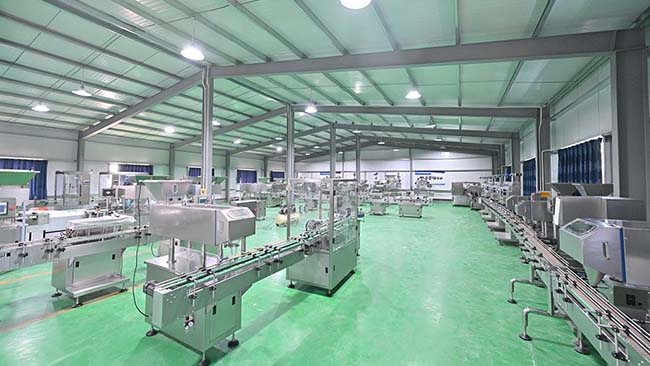
● Señales de fábrica: capacidad de producción real (no solo una oficina). Solicite fotos/vídeos de la planta de producción y un programa sencillo para la visita guiada.
● Referencias identificadas: al menos 1 o 2 clientes con los que puedas hablar (aunque sean anónimas, aún puedes verificar la historia).
Señales de alerta que suelen costar dinero más adelante.
● Declaraciones que evitan detalles: "alta calidad", "avanzado", "personalizable", pero sin método de prueba, sin tolerancia, sin criterios de aceptación.
● “Todo está incluido”, sin lista de entregables.
● No existe un plan claro para las pruebas FAT/SAT, la entrega de la documentación ni el control de cambios.
● Promesas de servicio vagas: "soporte de por vida" sin tiempo de respuesta ni plan de repuestos.
Un breve análisis de la realidad: los fabricantes sólidos suelen hablar en términos de cifras y procesos (número de empleados, capacidad de I+D, trazabilidad, rutinas de pruebas de salida, tiempo de respuesta). Por ejemplo, algunos fabricantes consolidados comparten abiertamente detalles como equipos de I+D especializados, sistemas de gestión auditados (ISO + 6S), trazabilidad completa de las compras y pruebas previas al envío, como el funcionamiento continuo prolongado. Si se utilizan con moderación, estos detalles operativos ayudan a distinguir la capacidad real de una buena página web.
“Fabricante de equipos farmacéuticos” es una etiqueta amplia. El correcto Proveedor de una máquina de llenado de cápsulas puede que no sea lo mejor para un máquina de envasado en blíster de alta velocidad integración de línea.
Utiliza preguntas específicas para cada categoría. No necesitas 50, solo las que revelen experiencias reales.
● ¿Cuál es su rango de dosificación y cómo verifica la precisión del llenado?
● ¿Qué tan rápido es un cambio real (con operadores capacitados, no con ingenieros)?
● ¿Cuál es el concepto de limpieza y qué piezas están diseñadas para ser retiradas rápidamente?
● ¿Cómo se controla la variación de peso y se rechazan los comprimidos que no cumplen con las especificaciones?
● ¿Qué ecosistema de torretas/herramientas admiten y con qué rapidez pueden suministrar las piezas de desgaste?
● ¿Cuál es su método para el control del polvo (desempolvado, extracción, puntos de sellado)?
● ¿Qué método de conformado se adapta mejor a mi producto (termoformado o conformado en frío) y por qué?
● ¿Cómo se gestiona el seguimiento web y el registro a gran velocidad?
● ¿Cuál es su método para verificar la integridad del sellado (y qué significa "aprobado/suspenso")?
● Precisión en el conteo y lógica de rechazo: ¿cómo se demuestra durante la prueba FAT?
● ¿Cómo se gestiona el cambio de producto sin largos periodos de inactividad?
● ¿Cuál es la estrategia para tratar con productos frágiles, que generan polvo y electricidad estática?
● ¿Qué gama de cajas está probada (no "posible")?
● Opciones de Leaflet, preparación para codificación/serialización y comportamiento de recuperación ante atascos a alta velocidad.
Ventajas y desventajas
● Línea completa llave en mano de un solo proveedor.
◆ Ventajas: responsabilidades más claras, menos conflictos de interfaz, puesta en marcha más sencilla.
◆ Desventajas: estás apostando por la profundidad de un solo equipo en todos los tipos de máquinas.
● Máquinas de primera calidad de múltiples proveedores
◆ Ventajas: mayor especialización por máquina.
◆ Desventajas: aumenta el riesgo de integración (controles, sistemas de transporte, plazos, responsabilidad de los problemas).
Las certificaciones ayudan, pero lo que realmente te protege en las auditorías reales son las pruebas: procedimientos escritos, piezas trazables, funciones validadas y documentación controlada.
Si vende en EE. UU., oirá hablar de las expectativas de la FDA en materia de cGMP (en particular, las partes 210 y 211 del título 21 del Código de Regulaciones Federales).
Administración de Alimentos y Medicamentos de los Estados Unidos
)
Si vende en la UE, oirá hablar de las "Buenas Prácticas de Fabricación de la UE" y, para la cualificación/validación de equipos, el Anexo 15 es un punto de referencia común.
Salud pública
)
Documentos que conviene solicitar con antelación (para no tener que reclamarlos después).
● Manuales de usuario + manuales de mantenimiento
● Planos eléctricos + esquemas neumáticos
● Lista de repuestos + repuestos críticos recomendados
● Declaraciones sobre materiales y piezas en contacto con el producto (cuando corresponda)
● Plantilla de protocolo FAT + ejemplo de registros de prueba
● Enfoque de control de cambios/manejo de desviaciones
l Si necesita preparación para la validación: mapeo URS, plantillas IQ/OQ, certificados de calibración
Si el software/los datos importan (alarmas, registros de auditoría, registros electrónicos)
Pregunte directamente si el fabricante de maquinaria farmacéutica puede satisfacer sus expectativas en lo que respecta a los conceptos de registros electrónicos/firmas electrónicas (que a menudo se abordan en el ámbito de aplicación y alcance de la Parte 11 de la FDA).
La mayoría de los proyectos requieren cierta personalización: formato de piezas, alimentación, manejo del polvo, diseño, interfaces de control. La cuestión es si la personalización se aborda como ingeniería... o como improvisación.
Cómo se ve la “verdadera profundidad de ingeniería”
● Pueden mostrar un proceso de revisión del diseño (incluso informal).
● Pueden explicar qué aspectos no personalizarán porque comprometen la estabilidad o la validación.
● Pueden señalar modificaciones anteriores y qué cambió en la documentación y las pruebas.
Preguntas prácticas
● ¿Cuántos ingenieros dan soporte a esta línea de productos (mecánica + eléctrica + controles)?
● ¿Cuál es el plazo de entrega habitual para piezas no estándar?
● Si se produce una solicitud de cambio durante el proceso de compilación, ¿cómo se documenta y se presupuesta?
(Como referencia, no como regla): cuando un proveedor puede hablar abiertamente sobre la inversión sostenida en I+D y la dotación de personal de ingeniería especializado, suele ser una mejor señal que la indicación "personalización disponible" en un folleto.
Una máquina puede estar bien construida y aun así fracasar en tu proyecto si el servicio es lento o poco claro. Considera el servicio como parte integral del producto.
Aspectos básicos del servicio para aclarar
● Alcance de la instalación y puesta en marcha (quién hace qué y qué debe proporcionar usted)
● Plan de formación (operadores + mantenimiento + traspaso de documentación)
● Plan de repuestos (lista de repuestos críticos, precios, opciones de envío)
● Proceso de soporte remoto (solución de problemas por vídeo, tiempo de respuesta)
● Programa de mantenimiento preventivo y soporte opcional tipo AMC (contrato de mantenimiento anual).
Si un proveedor afirma ofrecer “soporte rápido”, solicite detalles:
● Tiempo de respuesta objetivo (horas)
● Plazo de envío típico para repuestos críticos
● Ruta de escalamiento cuando la producción está caída
Este es el paso de "confiar, pero verificar", sin que esto se convierta en una sobrecarga de papeleo.
Verificación de referencias (manténgala simple)
● “¿Qué te sorprendió después de la instalación?”
● “¿Cómo manejaron el primer colapso real?”
● “¿La documentación se ajustaba a sus necesidades?”
● ¿Volverías a comprarles?
Visita a la fábrica: qué tener en cuenta
● Uniformidad en el montaje (cableado estándar, etiquetado, limpieza, organización)
● Mentalidad centrada en el control y la trazabilidad de los materiales entrantes.
● Cultura de las pruebas: ¿realizan pruebas estructuradas o solo demostraciones rápidas?
Grasa/Saturada: solicite los criterios de admisión con anticipación.
Una prueba de aceptación en fábrica (FAT) sólida no se limita a "funcionar", sino que "funciona y demuestra los resultados". Muchos proveedores serios incluyen pruebas prolongadas, ya que las demostraciones cortas pueden ocultar problemas de estabilidad. Por ejemplo, Rich Packing ofrece pruebas previas al envío que pueden incluir una prueba continua de 24 horas, además de un período adicional de verificación con alta carga. Úsela como referencia para el nivel de evidencia que solicita, no como un simple requisito.
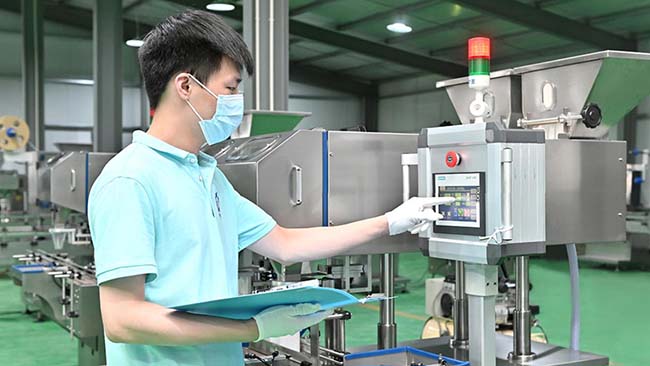 Pruebas previas a la entrega de la maquinaria farmacéutica de Rich Packing.
El presupuesto más barato puede convertirse en el proyecto más caro si genera tiempos de inactividad, desperdicio o constantes problemas de formato.
Preguntas sobre el costo total de propiedad que los compradores olvidan hacer
● ¿Cuáles son las piezas que más se desgastan y cuáles son los intervalos de reemplazo habituales?
● ¿Cuánto tiempo dura un cambio de turno real con un equipo capacitado?
● ¿Cuál es la tasa de rechazo esperada durante la producción en estado estacionario?
● ¿Qué ocurre si falla un componente clave, ya sea que se encuentre en stock localmente o se envíe internacionalmente?
Cláusulas contractuales que te protegen
● Lista clara de entregables (documentos, repuestos, herramientas, capacitación)
● Alcance y exclusiones de la garantía
● Expectativas de respuesta del servicio (aunque no se trate de un SLA estricto)
● Pagos basados en hitos vinculados a pasos de aceptación tangibles
Las compras internacionales son habituales en la industria de maquinaria farmacéutica. Solo asegúrese de que "internacional" signifique algo más que "exportamos".
Qué confirmar
● Asistencia con la documentación de envíos y aduanas
● Normas de embalaje y proceso de reclamaciones por daños
● Capacidad de puesta en marcha remota (si los viajes son limitados)
● Disponibilidad de socios de servicio locales (o un plan de viaje probado)
● Logística de repuestos (plan de existencias o canales rápidos)
Cuando las partes interesadas no están de acuerdo, un sencillo sistema de puntuación convierte las opiniones en una decisión.
Aquí tienes un ejemplo sencillo que puedes personalizar:
|
Categoría |
Peso |
Cómo se ve “bien” |
|
Ajuste de la máquina (su dosis + producción) |
25% |
Referencias comprobadas + criterios de aceptación claros |
|
Preparación de la documentación |
20% |
Muestra de FAT + manuales + (si es necesario) soporte IQ/OQ |
|
Calidad y estándares de construcción |
15% |
Componentes/materiales transparentes, montaje uniforme |
|
Servicio y repuestos |
20% |
Proceso de respuesta claro, plan de repuestos, alcance de la capacitación. |
|
Riesgo comercial y de plazos |
20% |
Plazo de entrega real, alcance claro, condiciones de garantía justas. |
Califica a cada proveedor del 1 al 5, multiplica el resultado por su peso y, por lo general, resulta obvio cuál es el "mejor para ti".
1) ¿Cuántos proveedores debo preseleccionar?
Normalmente entre 3 y 5. Menos de 3 limita el apalancamiento; más de 5 genera ruido.
2) ¿Realmente necesito un URS?
Sí, incluso una breve. Evita comparaciones inapropiadas y protege tu cronología.
3) ¿Qué documentos debo solicitar antes de pagar un depósito?
Como mínimo: lista de alcance, requisitos de diseño/utilidades, esquema de FAT, esquema de manuales, lista de repuestos y cronograma de entrega.
4) ¿Cuál es la diferencia entre FAT y SAT?
Las pruebas FAT demuestran el rendimiento en las instalaciones del proveedor; las pruebas SAT confirman la instalación y el funcionamiento en sus instalaciones.
5) ¿Cómo puedo evaluar el cumplimiento de las "Buenas Prácticas de Fabricación" (BPF) por parte de un proveedor de maquinaria?
Busque pruebas: prácticas de compilación rastreables, disciplina en la documentación, registros de pruebas y un enfoque preparado para la validación, alineado con los mercados a los que vende.
6) ¿Es más seguro comprar la línea completa a un solo proveedor?
Suelen ser más seguras en cuanto a responsabilidad y rapidez de puesta en marcha, pero solo si tienen una verdadera profundidad de integración.
7) ¿Qué ocurre si necesito registros de auditoría o funciones de registros electrónicos?
Plantéelo cuanto antes y confirme qué información respalda y documenta el proveedor en relación con las expectativas sobre los registros electrónicos.
8) ¿Qué pregunta permite identificar rápidamente a los proveedores débiles?
“Muéstrame tu protocolo FAT y un registro de prueba real de un proyecto similar.”

Entonces, ¿qué proveedor es el mejor para usted? La respuesta suele ser aquel que supera estas pruebas con la menor cantidad de problemas: alcance claro, compatibilidad probada con la máquina, documentación completa, pruebas rigurosas y un modelo de servicio confiable. Si sigue este proceso, elegir un fabricante de maquinaria farmacéutica se centra menos en las ventas y más en la evidencia, los resultados y la disponibilidad a largo plazo.
2. Comisión Europea: EudraLex Volumen 4 (Directrices de la UE sobre buenas prácticas de fabricación, incluido el Anexo 15).
3.FDA: Parte 11 — Registros electrónicos; Firmas electrónicas (Alcance y aplicación).
4.PIC/S: Guía de buenas prácticas de fabricación de medicamentos (PE 009). ( picscheme.org )

29+ years in pharmaceutical machinery, covering capsule filling, tablet pressing, blister packaging, tablet and capsule counting, cartoning, GMP production, and overseas machine service.

Correo electrónico : manager@richpacking.cn
Building D, No. 226, Beishan Qiaotou Street, Haizhu District, Guangzhou City, Guangdong Province, China


 Red IPv6 admitida